Lasting Landscapes by Carol

The Chelsea Chop

It’s time for the Chelsea chop! What is that you ask? The Chelsea chop is a pruning technique that keeps rangy perennials neater as the season advances. When done right, Chelsea chopping helps to extend bloom time and produce more flowers. The name Chelsea chop refers to the Chelsea Flower Show held in London each year. Those living in England start chopping in late May when the show is held. For those of us who live in North America, chopping should be done between late May and late June.

Not every perennial responds well to a hard pruning in early summer, but there are a number of plants I regularly cut back including asters, mums and tall perennials that tend to fall over when they start to bloom. I’m not a fan of staking, so I prefer the Chelsea chop method for maintaining a nice form. For Asters like ‘Lady in Black’ and ‘October Skies’ I chop the plants in half. This delays the bloom a bit, but most importantly improves the plants stature so it looks tidier when it flowers. I use the same technique for my Chrysanthemum Sheffield Pink and Coreopsis tripteris.
Lasting Landscapes by Carol
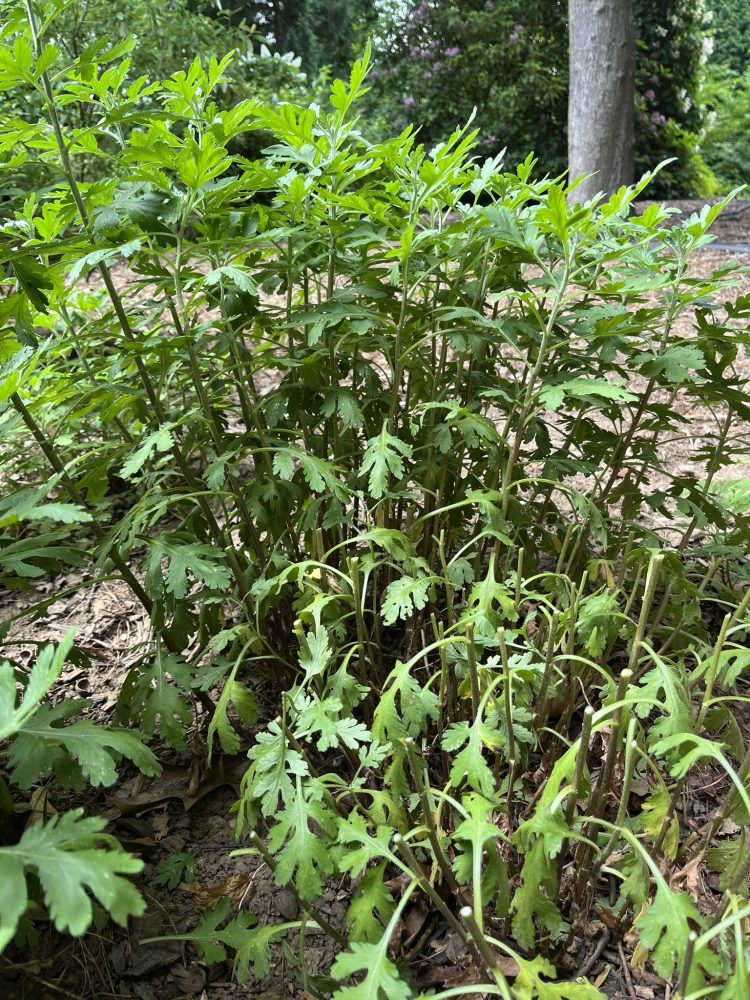
A half-chopped Chrysanthemum shows how the technique works.
Lasting Landscapes by Carol
Cutting back perennials like this Aster ‘Lady in Black’ can be stressful, but plants respond quickly by sending out new growth. This additional branching often results in more flowers.
Lasting Landscapes by Carol
If I didn’t but back this Coreopsis tripteris, it would flop onto the driveway. Instead, I chop it and it stays upright when in flower.

For plants like Phlox paniculata, experts recommend either cutting back the entire plant or staggering pruning, only cutting every other stem or so. This helps to prolong bloom time, since some of the stems will bloom first and others later. I’m told there are a number of perennials that benefit from the Chelsea chop like Solidago. I’ve never tried chopping my Solidaga caesia or even my Aster divaricatus, but this year might be the time for me to try the technique on them so I can see the results for myself.
Lasting Landscapes by Carol
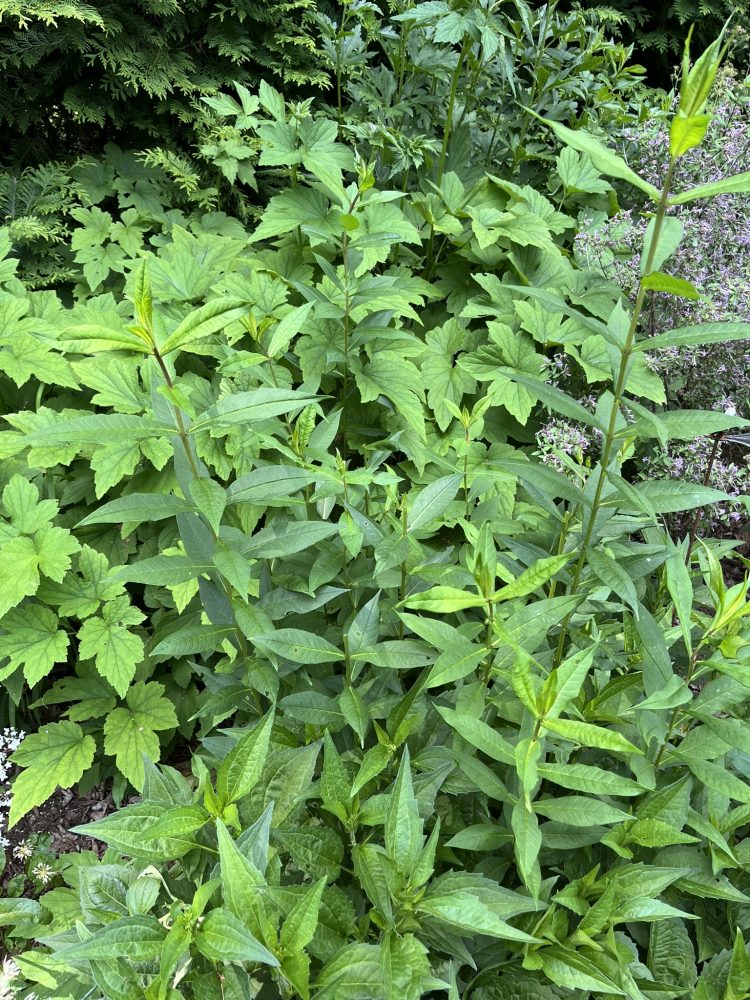
I cut alternate stems on this Phlox paniculata to prolong the bloom time.

I encourage you to chop away before the end of the month. You’ll be rewarded with neat and tidy plants, lots of flowers and extended bloom times. My guess is you’ll love the technique so much you’ll want to set a recurring reminder each year for this important garden activity.

Lasting Landscapes by Carol

Just Say No

Just about every day I see at least one mulch volcano around a tree or beds mulched with dyed wood chips. Both scenes make me cringe. Why? Because neither do anything to enhance the health of the plant material they surround.

Lasting Landscapes by Carol
A mulch volcano around a tree creates a telephone pole look.
Lasting Landscapes by Carol
This is the only kind of mulch volcano I like. Real mulch in the making, steaming away as it decomposes.

Dyed wood chips (black or brown) often contain shredded palettes or other wood products as opposed to natural materials like roots or bark. Dyes and non-organic matter add no nutrients to the soil when they eventually decompose (and it takes a long time). So why use them? Most people choose dyed mulches because the colors last longer and they feel the dark color sets off the plants better. That may be true, but I encourage you to change your perspective. Create healthy soil instead which is best achieved by using materials like bark, roots or leaves that will add nutrients to the soil upon decomposition.

Lasting Landscapes by Carol
Dyed mulch looks nice, but does nothing for your plants.

In addition to choosing a natural mulch, focus on planting correctly. As Andy Schenck, owner of Sam Brown’s Wholesale Nursery, likes to say, “Trees are not telephone poles.” Trees, when planted properly have an obvious root flare. Sometimes you have to dig down into the soil to find the root flare, even if you purchase a tree from a reputable nursery. But don’t skip this step. Finding the root flare is an important practice if you want your tree to last a long time. If you cover the root flare with mulch, you will encourage insect infestation and other diseases by causing moisture to be in direct contact with the bark. When you mulch the tree after planting, keep the mulch away from the root flare. Resist the urge to keep piling it on year after year.

Lasting Landscapes by Carol
This tree was buried a couple of inches too deep. Now the root flare is exposed, enhancing the health of the tree.
Lasting Landscapes by Carol
The mulch really buried this poor tree. You can clearly see the old mulch line. I can almost hear the tree sighing with relief.
Lasting Landscapes by Carol
A properly planted and mulched tree.


While these best practices in planting and mulching may take some extra time and cause you to change what you think is pretty, I plead with you to do what’s best for your plants. Just Say No to mulch volcanos and dyed mulch to create a landscape that lasts!