My friend Lenny is an artist through and through. Initially inspired by the fashion industry, he spent a year in England in the mid to late 80s where he studied shoe making at the prestigious Cordwainer school and then served as an apprentice. After returning to the US, Lenny tried to find employment in the shoe industry to no avail. But at this time, he embarked on a career in horticulture becoming inspired by nature and gardens while keeping his shoemaking on the back burner.
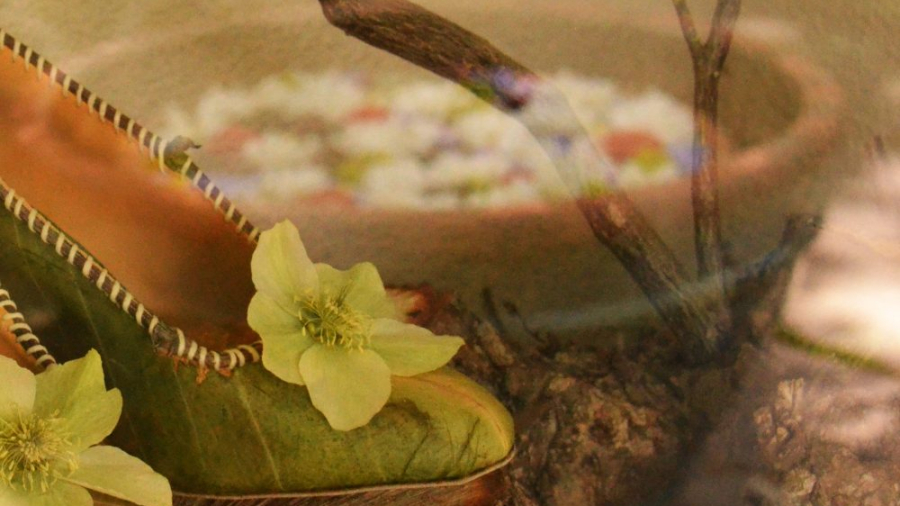
As it often happens in life, serendipity intervened. Lenny had the opportunity to utilize natural materials from the gardens where he lived and worked to create an ephemeral piece for an art exhibit – a pair of shoes. Since then, he has made over 50 pairs of shoes.
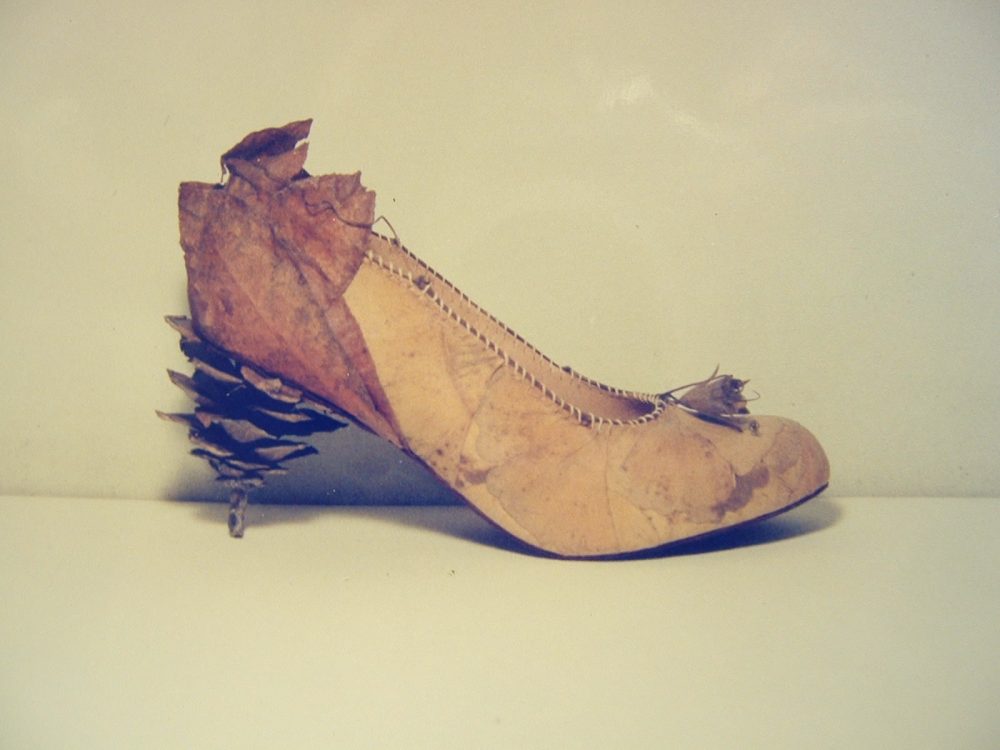
I was first introduced to Lenny’s work at Winterthur during their yuletide exhibit in December of 2023 where I saw his art on display and was wowed by his attention to detail and composition. Currently Lenny is working with Chanticleer to harvest materials from their garden (with permission of course) to create living art that will be on display in a case on the patio of the main house. Using seasonal materials from the garden, Lenny will construct five pairs of shoes that will be on display from the end of April to July. An additional five pairs will be on display from the end of July through October. In addition to sharing his work with visitors, Lenny will educate the public about plants featured in a garden during exhibition-related programs.
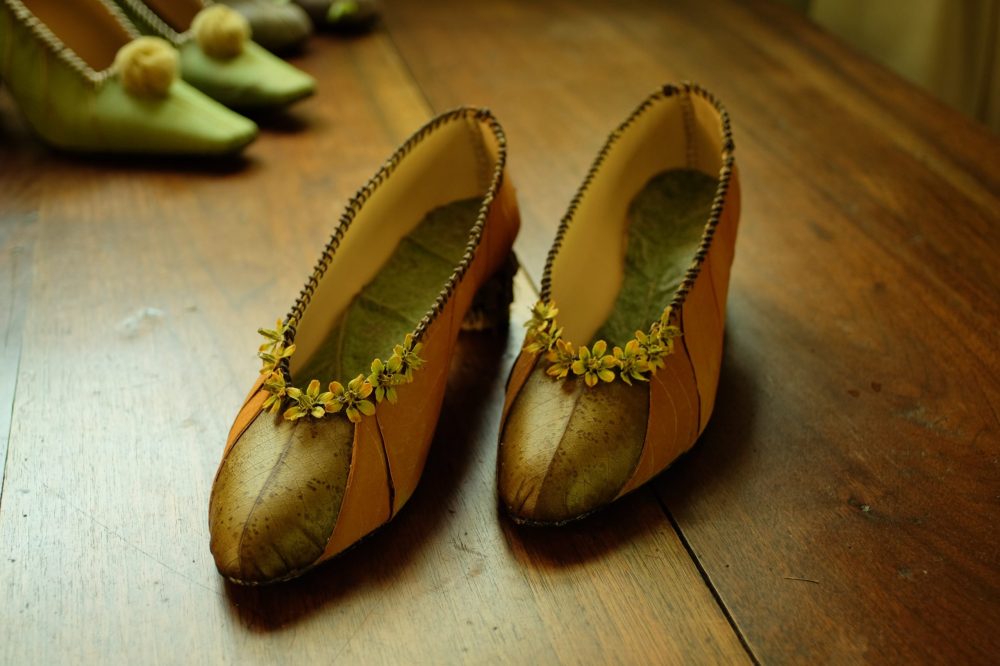
I tagged along on Lenny’s trip to Chanticleer to learn what inspires him and what materials he finds the most useful. I loved hearing that Lenny was intrigued by the story of the original owners, the Rosengarten’s, and sought to create a pair of women’s shoes and also a man’s slipper in honor of them.
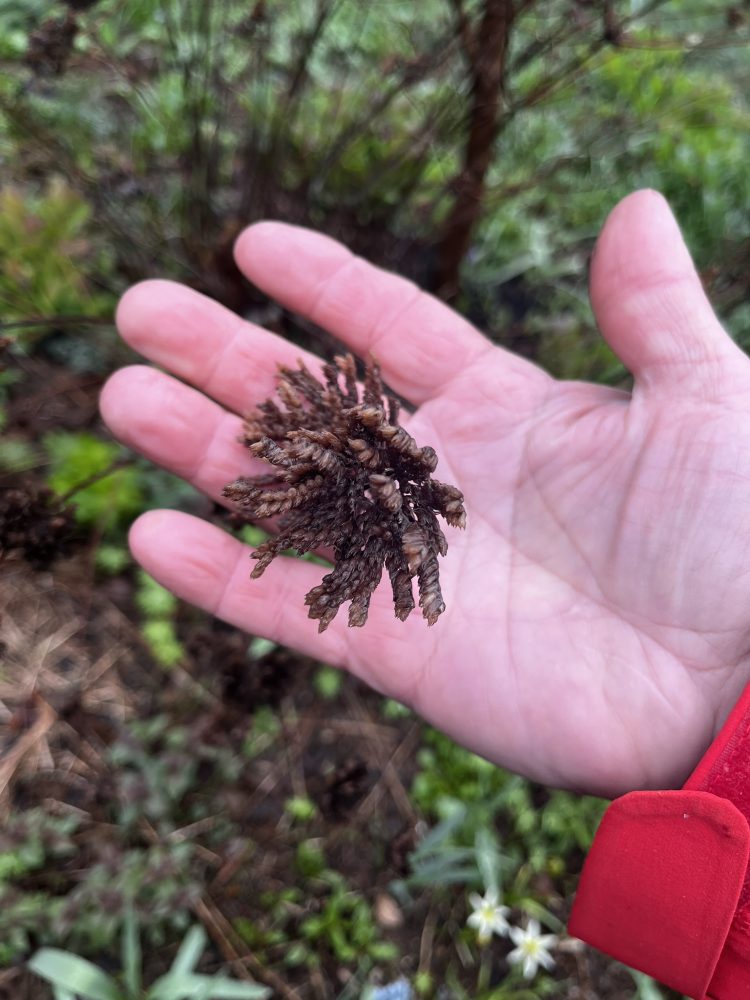
I observed Lenny selecting large leaves with interesting veining or patterns. As you can imagine, he needs a number of leaves to cover the leather form. At the same time, he didn’t want to make his harvesting apparent, so he collected carefully. For details and embellishments, he often uses seed heads or vines. To simulate a brocade, he’ll use an interesting conifer. He often turns leaves upside down when applying them to the form. Bark, branches or cones become heels. Lenny explained the difficulty in getting the patterns to match from shoe to shoe, since every leaf or branch is slightly different.
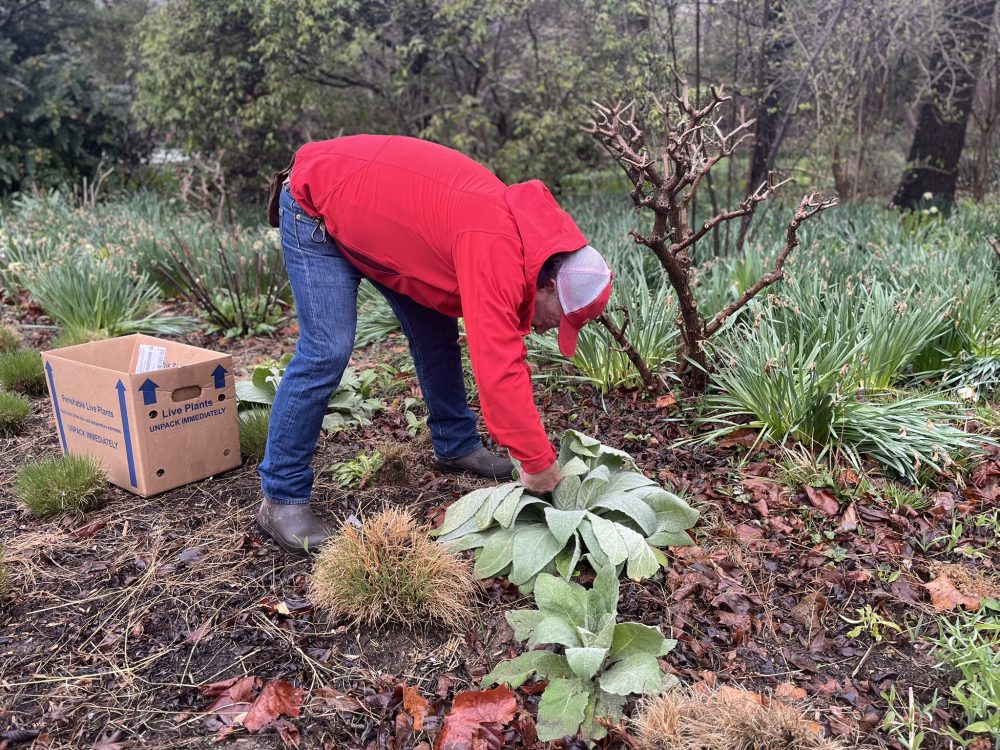
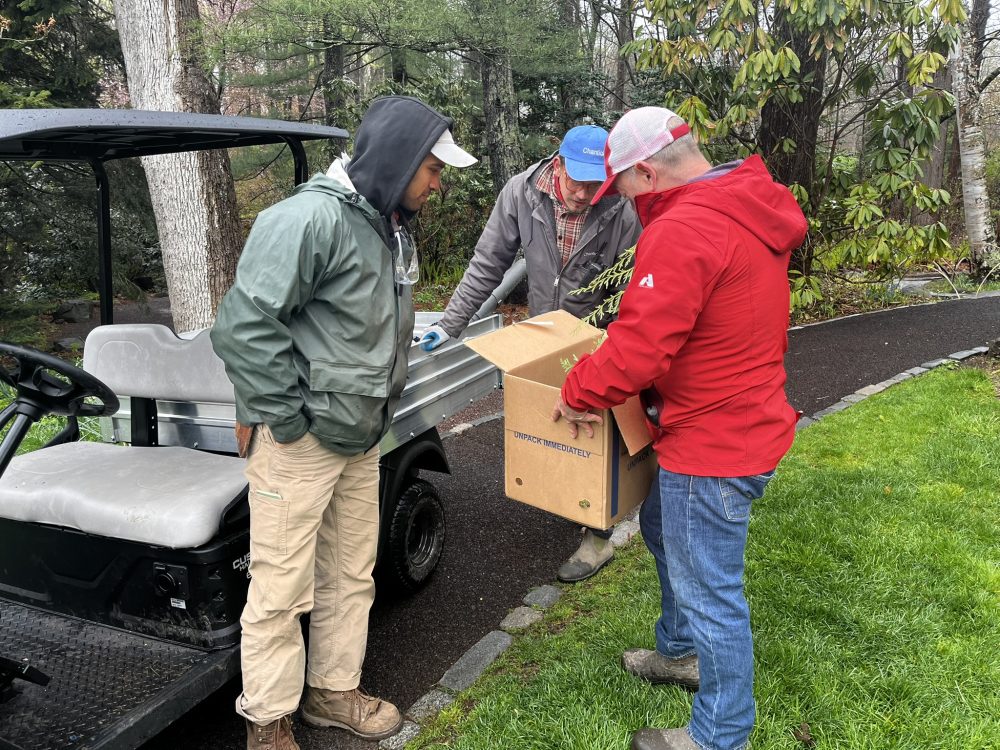
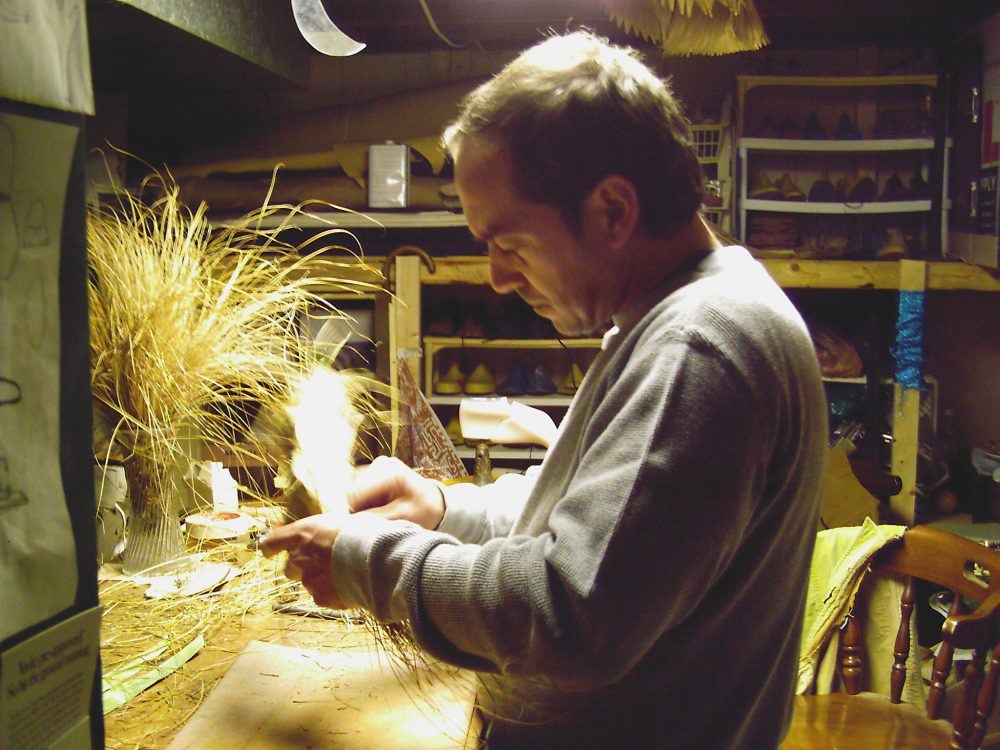

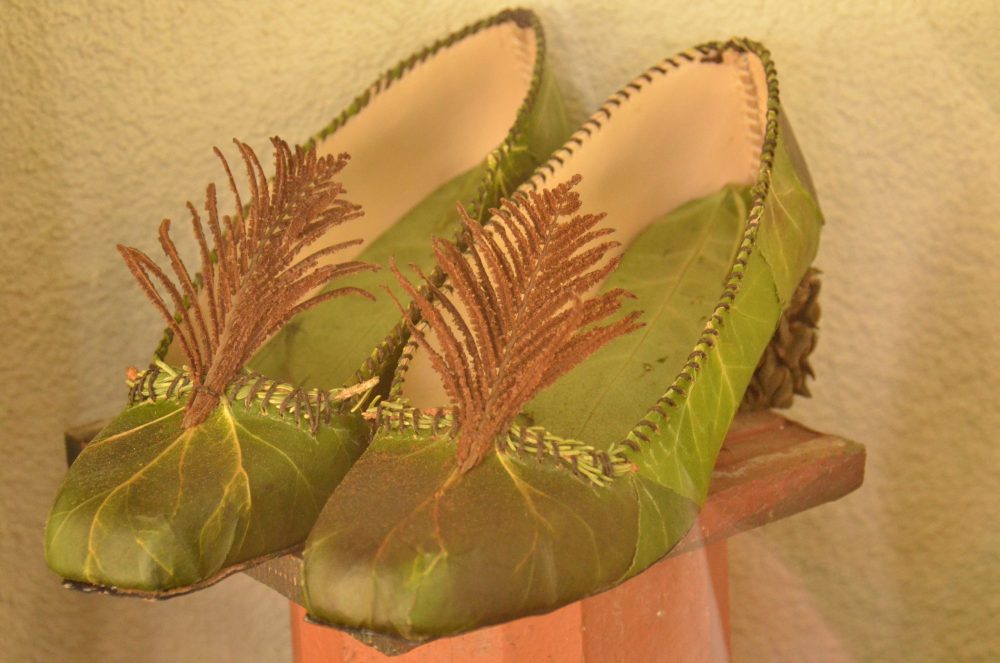
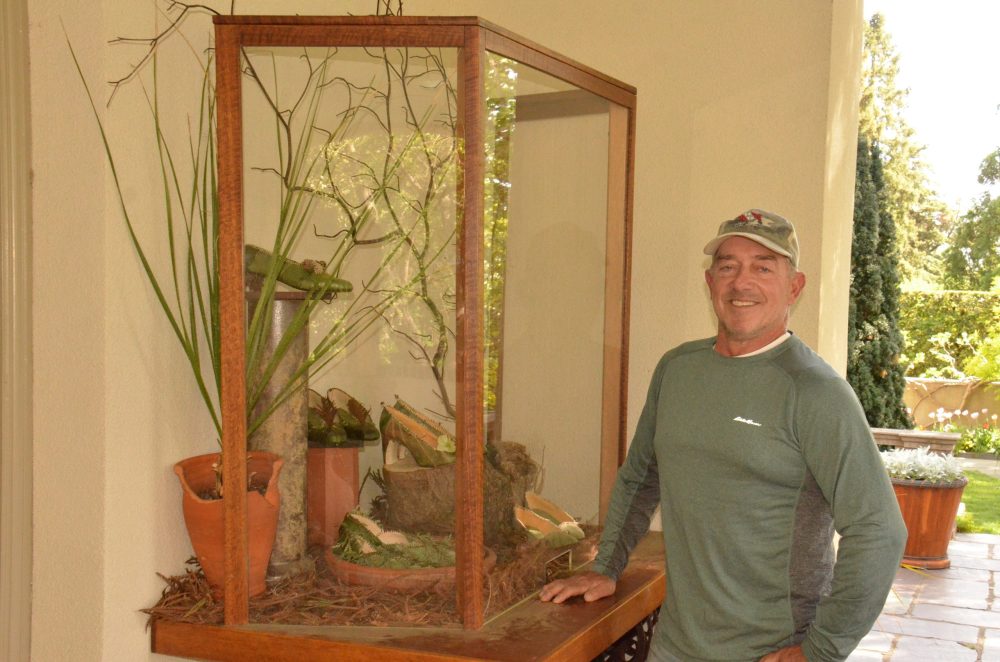
Seeing the shoes on display and witnessing the process of their creation is a gift; I highly recommend you visit Chanticleer to see the garden and the art Lenny created from it. I hope all the other public gardens in America’s garden capital take advantage of Lenny’s talents and commission him to create shoes made from materials on site. And if you’re wanting a pair for yourself, you can reach out to Lenny directly on Instagram @lennywilson. As you can imagine, the shoes won’t last forever. But that’s another thing that makes them special. Just like with our gardens, plants come and go. We cherish them while they exist and are forever touched by their beauty.