Lasting Landscapes by Carol

Snowy Days

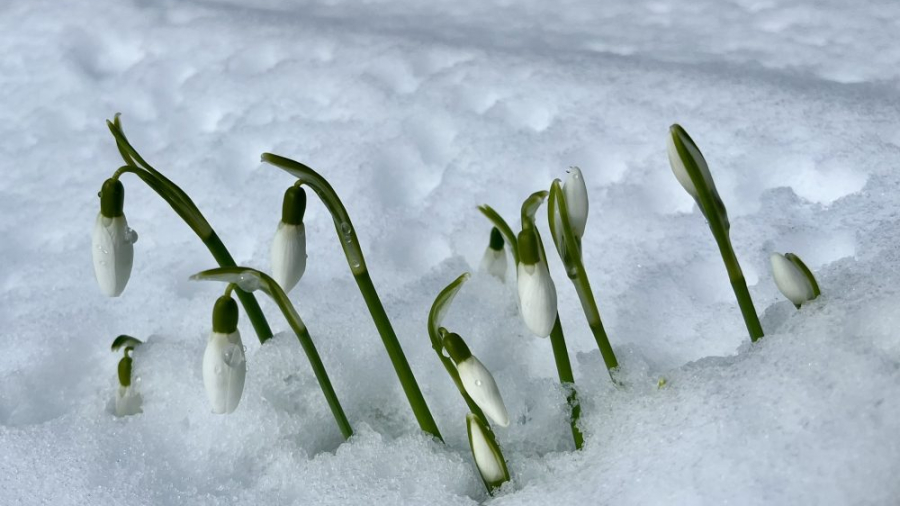
We’ve already had some snow in the Mid-Atlantic. While some people hate the snow, I like a good winter storm or two, especially if I don’t have to drive in it. Another thing I like about the winter is the appearance of Galanthus in the landscape. Commonly known as snowdrops, Galanthus are small bulbous perennials native to Europe and Asia.

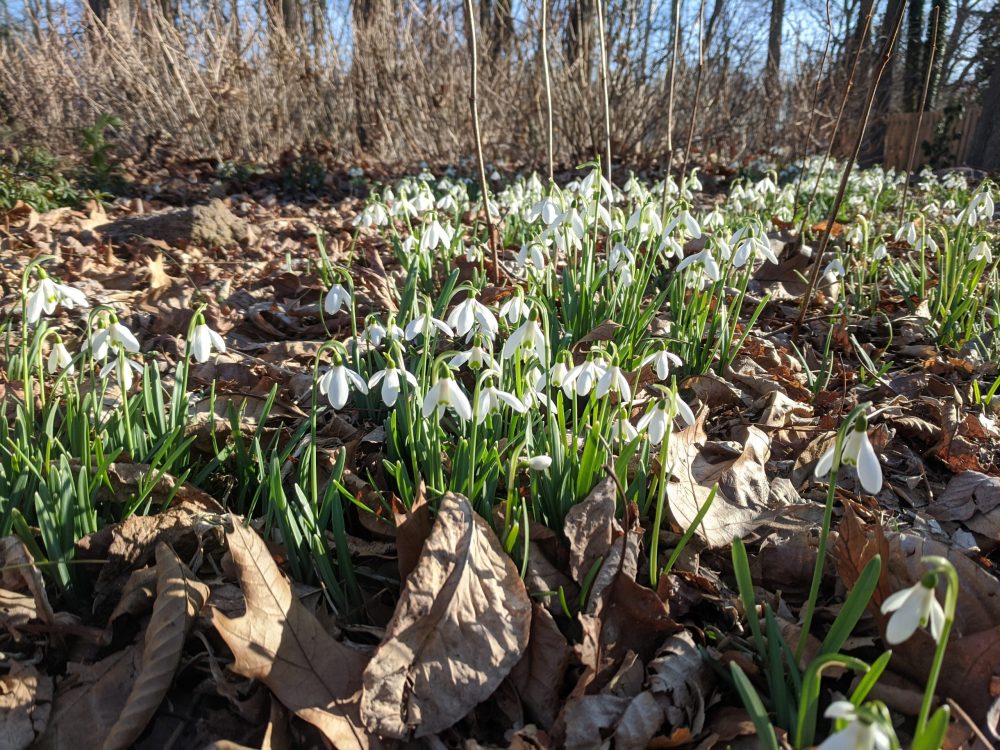
Snowdrops are appealing for many reasons. They like part sun or shade in humus-rich soil, divide easily, bloom from October to April, and spread themselves freely by self-seeding and bulb offsets. To me, seeing a continually expanding carpet of snowdrops is one of the most delightful scenes in the garden.
Lasting Landscapes by Carol
A large colony of snowdrops steals the show in my early winter garden.

As with many other plants, Snowdrops vary in bloom size and time, shape and color. True collectors, like many of my friends, consider themselves ‘galanthophiles,’ since they passionately seek out as many different varieties as possible and can tell you the distinctive characteristics of each kind.
Lasting Landscapes by Carol
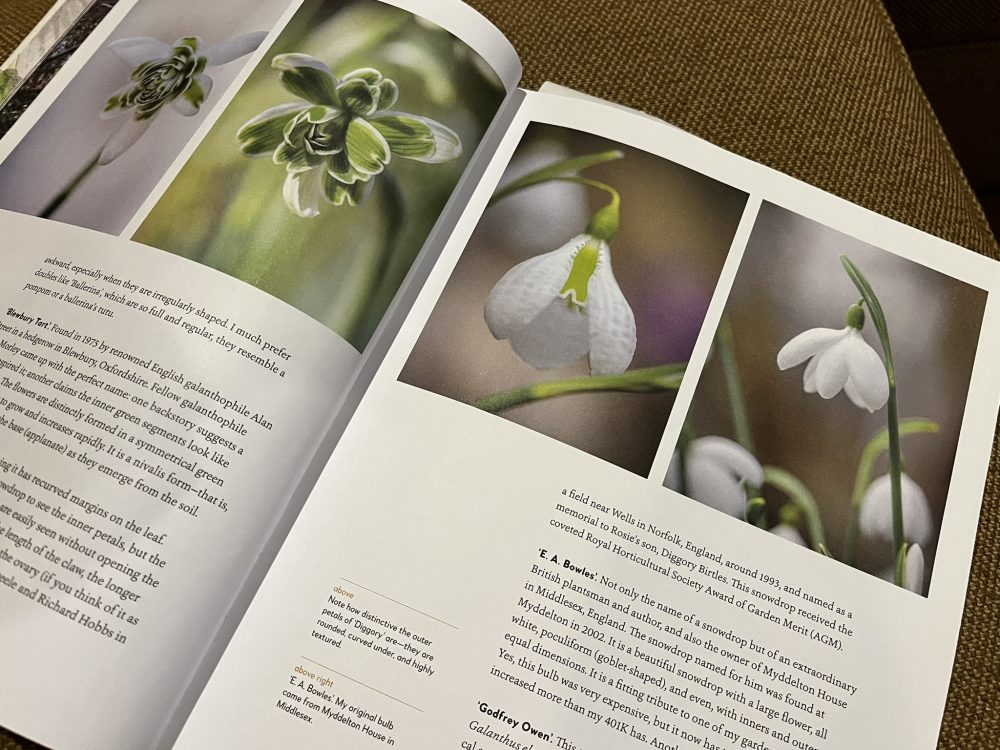
David Culp, in his book ‘A Year at Brandywine Cottage’ highlights a portion of his galanthus collection. David proudly professes his ‘Galanthophile’ status.

I have an expanding collection of unique Galanthus, but also some of the most common types. Plant snowdrops at the base of deciduous perennials since they go dormant in the spring and will eventually be covered up by the expanding foliage of plant material that share their space. Deer and rabbits typically leave snowdrops alone. Something is eating mine though – perhaps mice or a confused rabbit who hasn’t read the book on what he’s supposed to like.
Lasting Landscapes by Carol
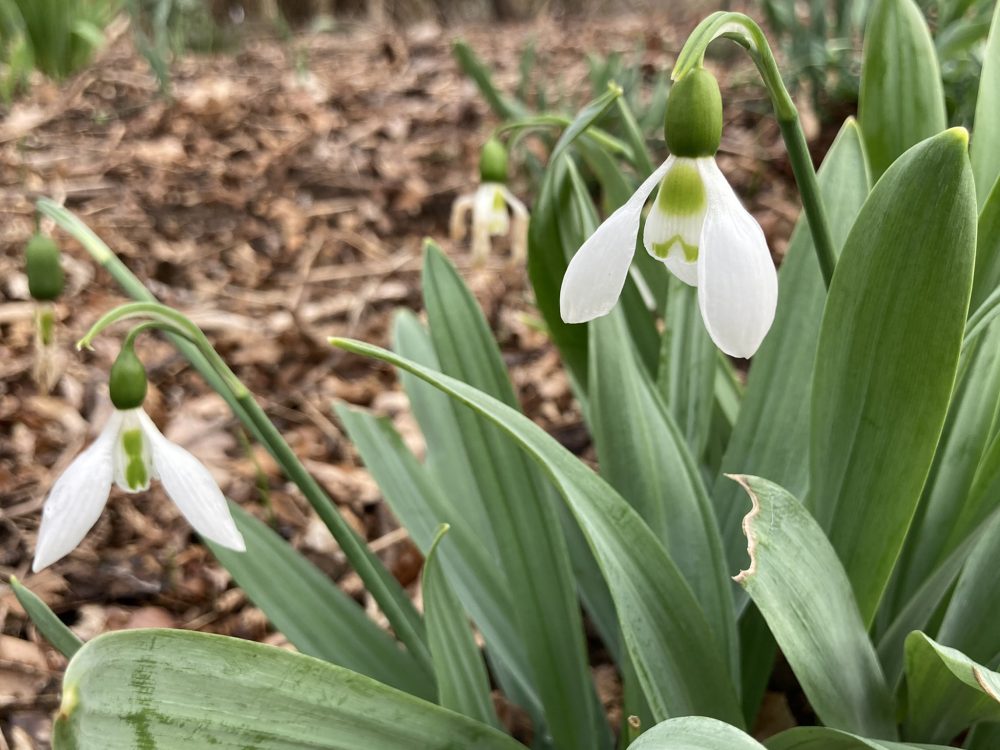
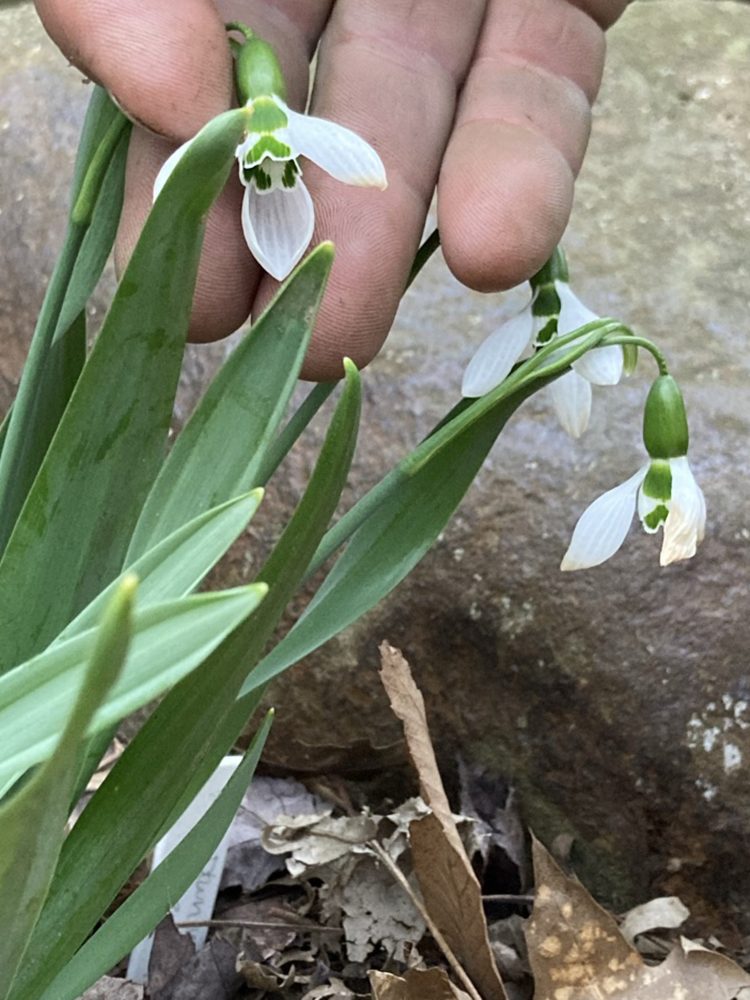
My horticulture friends encourage me to look closely at the patterns in my snowdrops. As a result, I appreciate the natural variation.

Galanthus nivalis (Common Snowdrop) performs reliably, is readily available and features pure white flowers with a distinctive ‘V’ marking on the inner petals. Galanthus elwesii (Elwes’ Snowdrop) is larger and broader than nivalis with more robust flowers. Another popular variety is Sam Arnott, a large flowered cultivar known for its strong and upright growth.

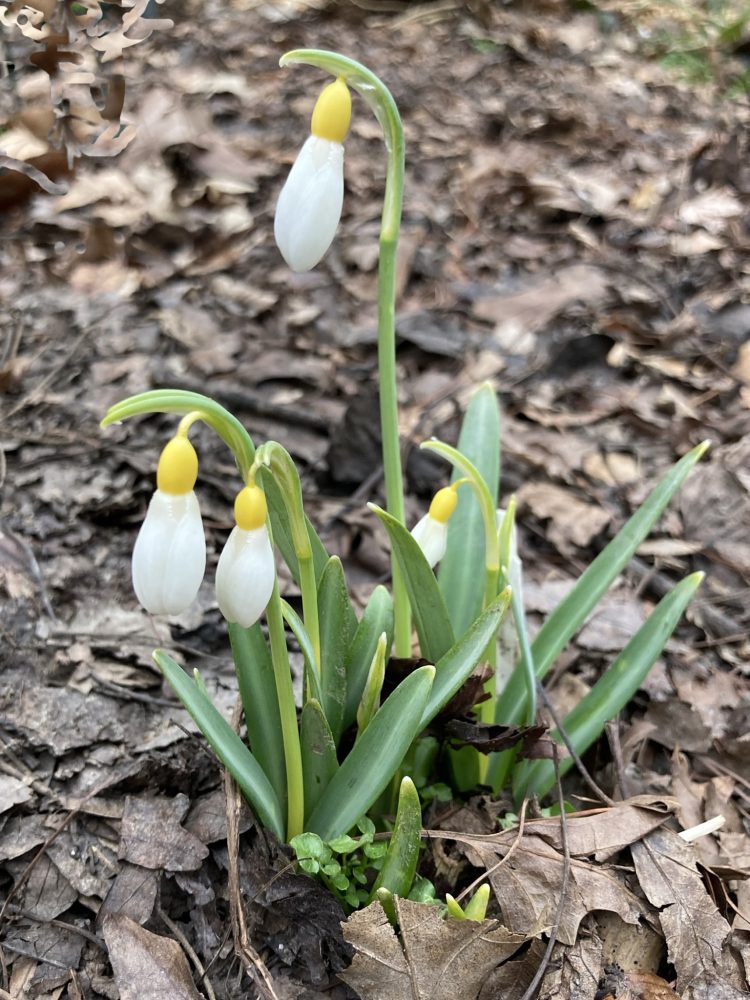
Some of the more uncommon selections I’ve collected include ‘Potter’s Prelude’ which blooms in November and December, ‘Wendy’s Gold’ which has a yellow ovary and some of the doubles like ‘Flore Pleno’ and ‘Blewbury Tart.’
Lasting Landscapes by Carol
One of the more special snowdrops in my collection has yellow ovaries which sets it apart from the others.
Lasting Landscapes by Carol
Another snowdrop with distinctive markings demands close inspection.

While many of us try to avoid getting bugs in the winter, don’t worry about getting the snowdrop bug. In fact, I encourage infection! To facilitate this, be sure to add the Galanthus Gala to your calendar right now. This event, the brainchild of my friend David Culp, features growers, specialty vendors and a lecture series. You can purchase tickets to attend the lectures and access the vendors early, or simply show up between 10:00 AM and 3:30 PM on March 1, 2025 at the Downingtown Friends Meeting House to shop the vendor space for free.
Lasting Landscapes by Carol
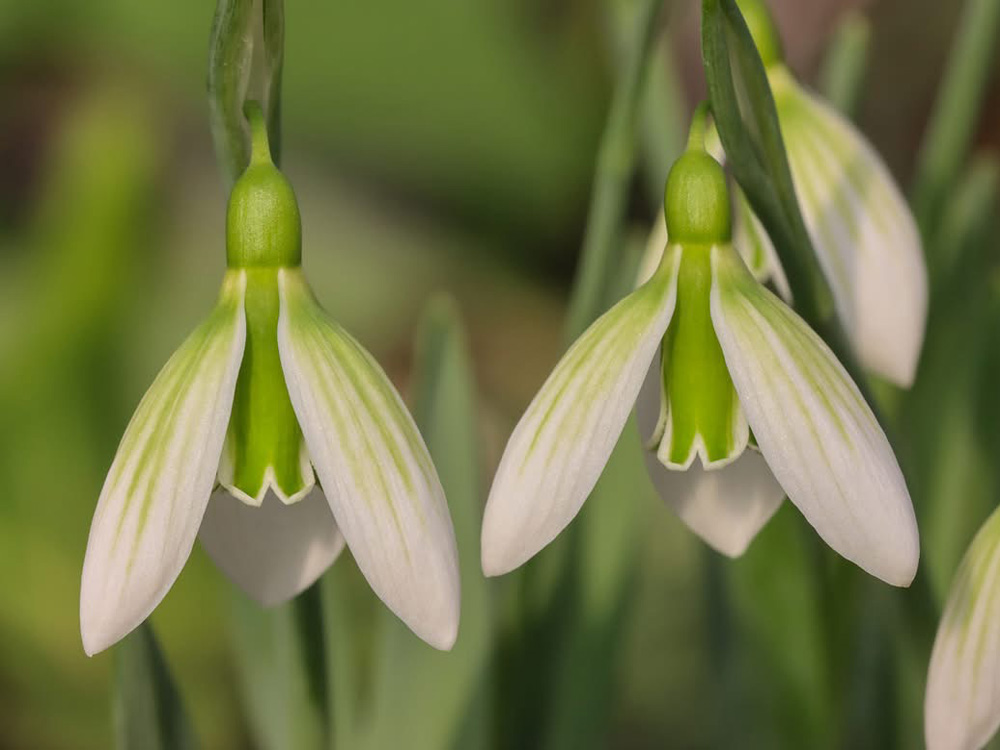
Galanthus gracilis ‘Eleanor Grace’ is one of the unique snowdrops that will be availalbe at the Galanthus Gala. Photo by John Lonsdale.

I can promise you will leave the Gala with some amazing Galanthus along with a number of unusual and desirable companion plants sure to add cheer and interest to your space. I look forward to seeing you there!

Lasting Landscapes by Carol

One of a Kind

I am blessed to have come in contact with some amazing plantsmen and women over the years.  People who love plants, know plants and most importantly share plants!

Today I’ll expose you to some of my unique and cherished specimens. While somewhat hard to find, these plants are available.  As with most things in life, it’s all about leveraging your network.

My friend Andy, who owns Sam Brown’s Nursery, is a plant savant and I’m not the only one who thinks so. I shop at Andy’s nursery and he has helped me find some unusual and interesting plant material.

Andy patented Metasequoia ‘Soul Fire,’ a tree with golden needles that lights up the garden and immediately draws your attention. According to the Plants Nouveau website “each spring, bright, lime-green needles emerge with a rosy-orange frosting, making for a two-toned effect. As the summer days grow longer, and the heat and humidity pick up, the needles change to bright, chartreuse and don’t fade until fall brings on a bright, orange hue.” I adore this plant, its changing color scheme and its fast growth.

Lasting Landscapes by Carol
Metasequoia ‘Soul Fire’

I’m a sucker for any plant with variegation, so I was thrilled to find a variegated form of our native ginger (Asarum canadensis). Asarum is a great ground cover and excellent shade garden plant made much more impactful when adorned with splotches of white.

Lasting Landscapes by Carol
Asarum canadensis variegata

Another plant I love was sourced by John O’Brien of Connecticut.  ‘Carol’s Limelight’ Daphne is a sport of Daphne Carol Mackie. I purchased this special beauty at the Galanthus Gala in Downingtown, PA in early March in my quest to have yet another plant named Carol.

Lasting Landscapes by Carol
Daphne ‘Carol’s Limelight’

I learned about Calanthe discolor in a class I took at Longwood Gardens.  I ordered mine from Plant Delights Nursery in North Carolina and had it shipped. While it doesn’t look like much now, I look forward to the flowers this plant will share with me in the future.

Lasting Landscapes by Carol
Calanthe discolor

Far Reaches Farm was the provider of my Pachyphragma macrophyllum, a great shade plant for dry conditions.  This evergreen plant chugs along, looking great all season and showing off some pretty spectacular flowers. While related to the invasive thug, garlic mustard, Pachyphragma is a well-behaved cousin.

Lasting Landscapes by Carol
Pachyphragma macrophyllum

While it is easy to hop in the car and head to the local nursery or big box store for plants, I encourage you to seek out a few ‘one of a kind’ plants for your landscape. Try mail order suppliers and attend local plant sales hosted by plant societies. And of course leverage the expertise of your gardening friends.