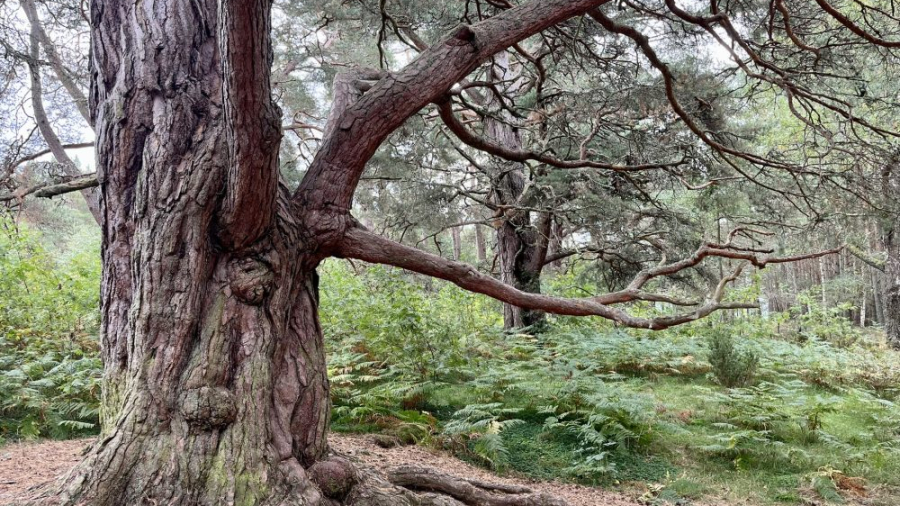
Deciduous tree in a forest

A Seminar Called “Tree”

When I applied to college, Harvard University never made my list. Today, it would sit at the very top—not for prestige, but for a freshman seminar called “Tree.”

This one-credit course, created by Arnold Arboretum director Ned Friedman, invites students to do something radical: form a relationship with a tree. First offered in 2020, the class pairs each student with one living organism from the Arboretum’s 16,000-tree collection. The goal is simple but profound—build a lifelong connection with the natural world while stepping away from the noise of the digital one.
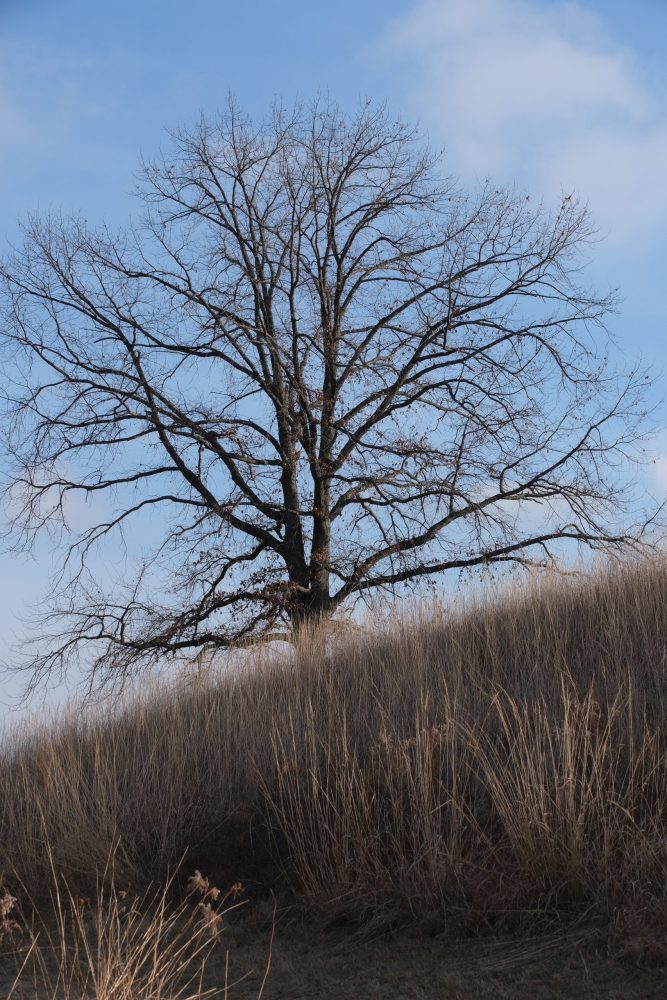
Bare tree with sprawling branches in a field of brown grass
I’m programmed to notice trees. This one caught my attention during a walk at a preserve near my home.

On the first day, students walk a mile through the Arnold Arboretum as Friedman explains the semester ahead. Each student chooses a single tree to observe, study, and return to again and again. Over time, that tree becomes more than an object of study—it becomes a partner.

The course blends science, poetry, and storytelling to deepen that connection. But its real focus runs deeper. Friedman challenges students to ask bigger questions: What does it mean to live a good life? A meaningful life? A connected life?

In an interview with Margaret Roach, Ned described his hope to share what he feels when standing beside a witch-hazel glowing gold against fresh snow. He wants students to feel awe. To slow down. To notice. To carry that awareness forward—not just for a semester, but for life.
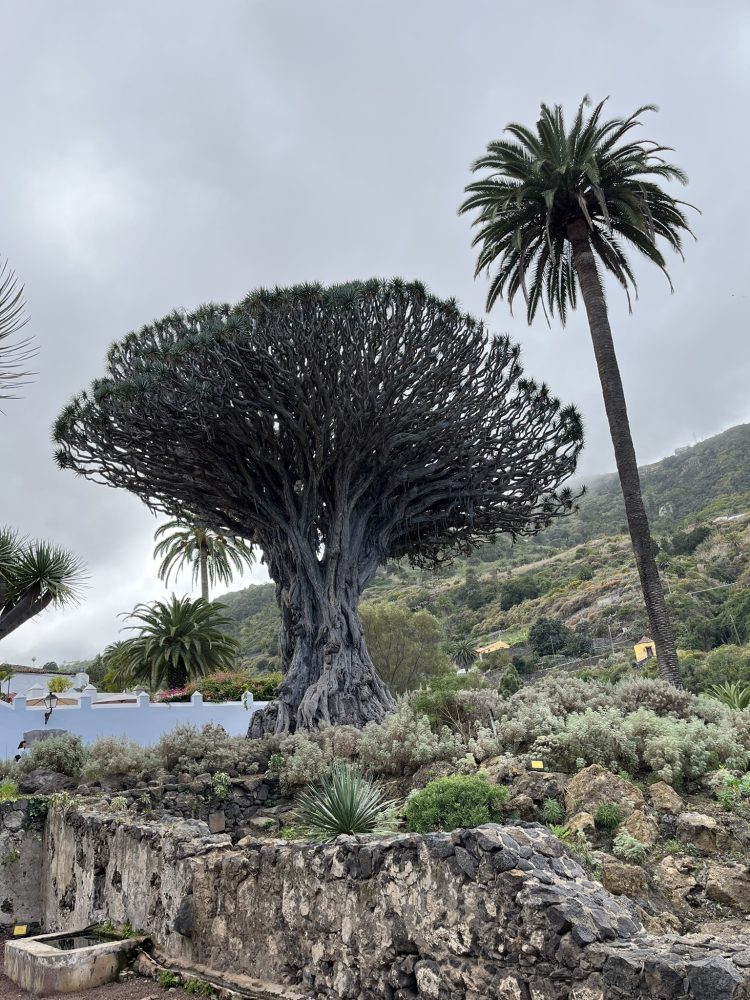
Draco tree with palm tree next to it
I have experienced the awe that Ned wants his students to feel. How can you not be inspired when standing beside a thousand-year-old tree like this Dragon Tree (Dracaena draco) in the Canary Islands?

Students choose their trees in deeply personal ways. Some look to heritage—a Korean or Chinese student might choose a tree native to home. Others respond to shape, size, or presence. One Native American student chose a maple, honoring its cultural significance and traditions.

roots from rubber tree expanding on ground with tree canopy above
The sprawling roots of this magnificent Ficus macrophylla in Buenos Aires create a striking feature—one that could easily captivate students if a similar tree were part of the arboretum.

A short story in the course called “A Tree, A Rock, A Cloud,” teaches a quiet but powerful lesson: practice love by turning first to the natural world. Love something that cannot love you back. In doing so, you learn to give without expectation—a skill that feels increasingly rare in a world quick to judge, reject, or divide.
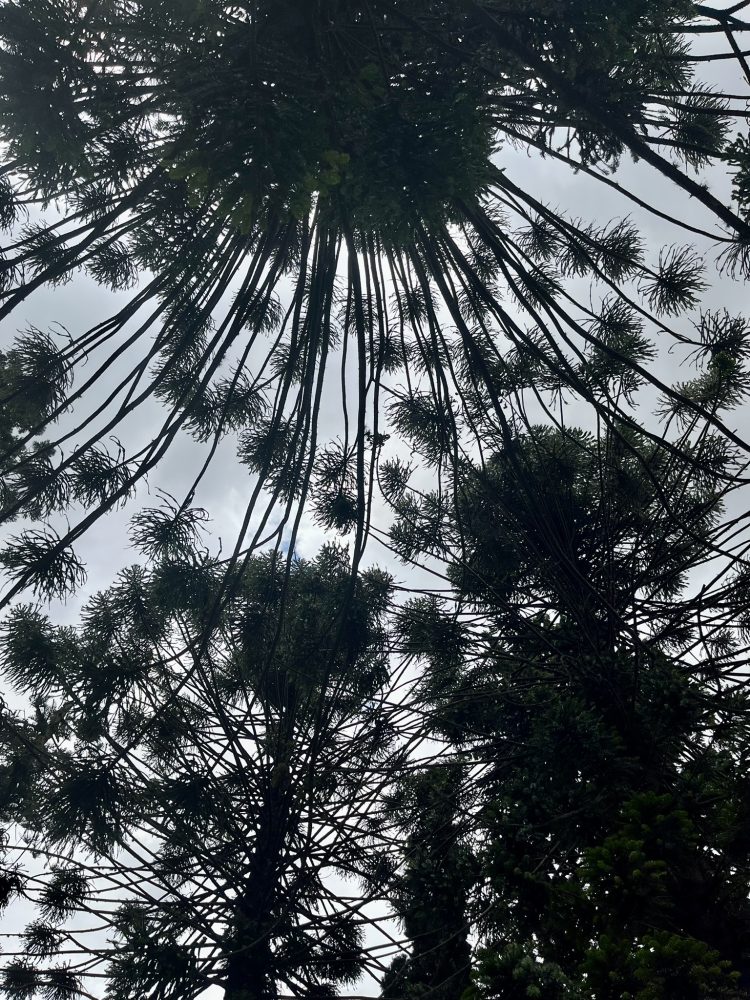
looking into tree canopy and seeing unique pattern against sky
Observing the canopy is one way to pay attention and notice a tree’s presence.
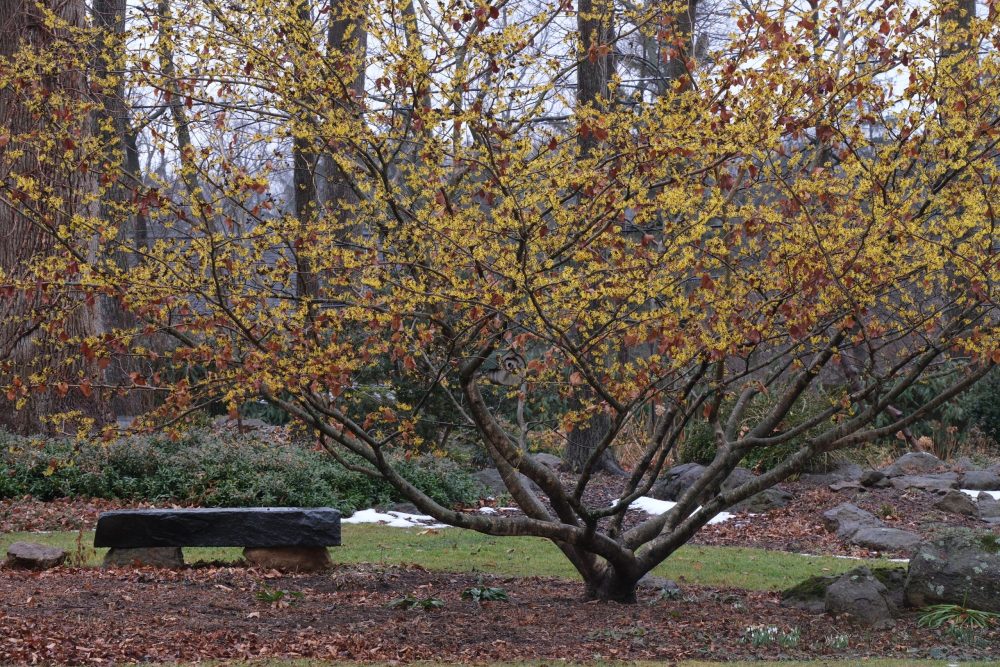
Yellow blooming witch hazel with sprawling habit
In my own garden, the first tree I would partner with is my witch-hazel. Though it was incorrectly identified as a different cultivar and damaged when a tree climber dropped a chainsaw into it, the tree remains steady and resilient. It never disappoints, offering a beautifully sculpted branching structure and a reliable, fragrant bloom.
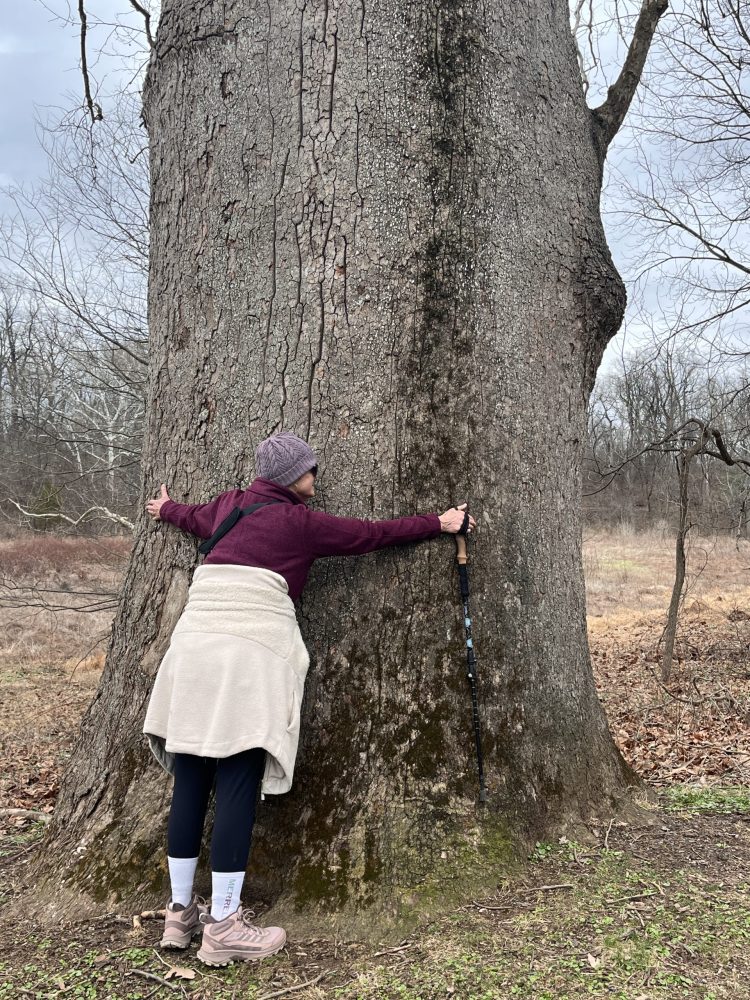
woman hugging tree
Hug a tree. Show it some love even if it can’t promise to love you back.

Step outside. Walk into your backyard, a park, or a local arboretum. Find a tree. Return to it. Pay attention. Connection starts small. But if we practice it—patiently, intentionally—we might just grow into people who make the world a little more hopeful, and a lot more kind.
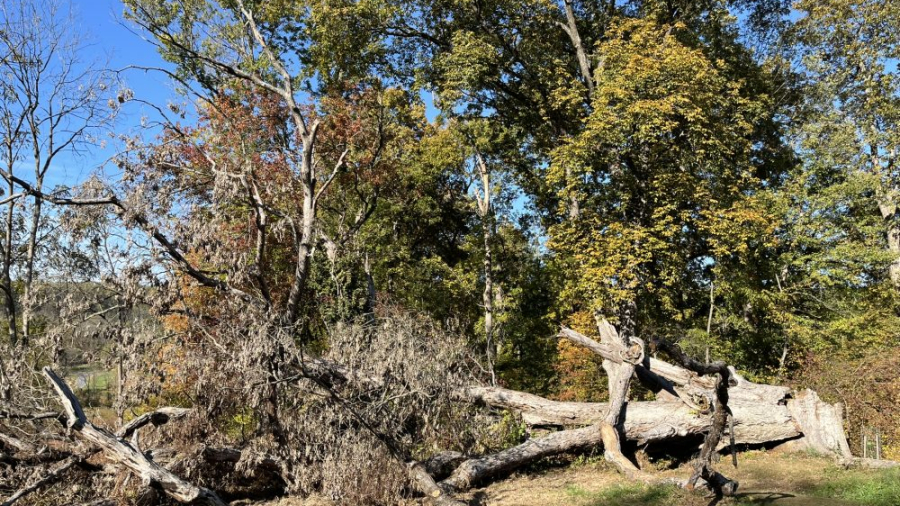
fallen oak in field

Remembering Anna’s Oak

Last fall, I visited an art exhibit called “Remembering Anna’s Oak” at the Warwick Furnace in Glenmoore, PA. The exhibit honored a beloved historic tree through commemorative works of art, including pieces made from its bark, leaves, and branches.

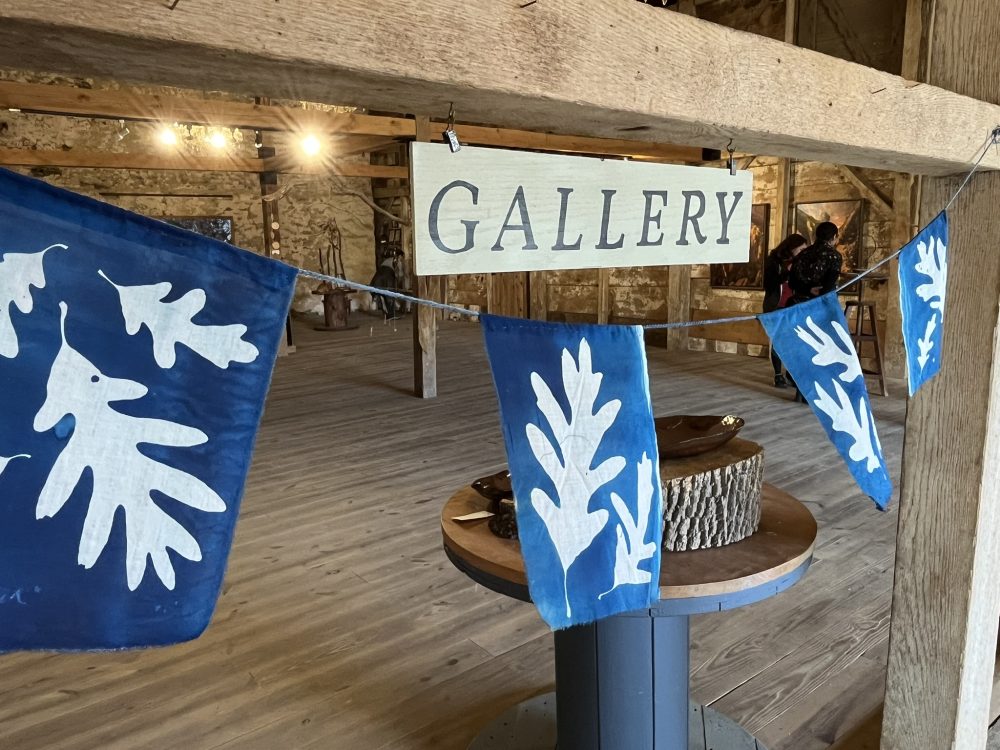
gallery sign with blue and white cyanotype flags of oak leaves
Cyanotype oak leaves greeted us as we entered the exhibit.
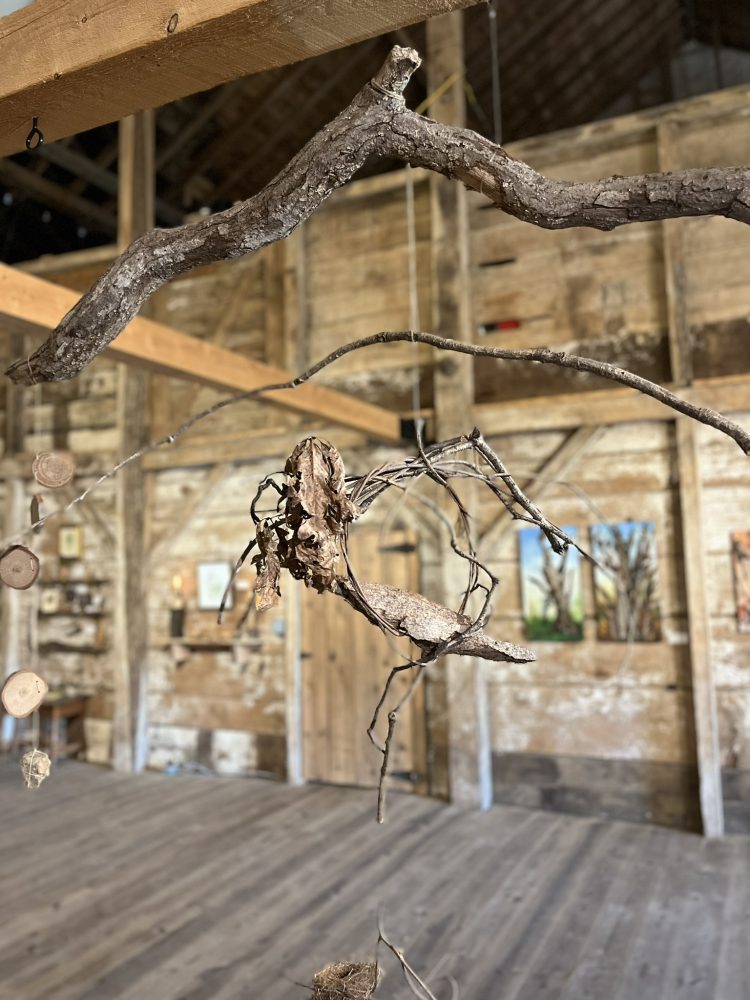
hanging branches in gallery
Branches formed a mobile.
knot of wood with painting in the background
A piece of the tree hung in the gallery and served as a picture window highlighting the painting beyond.
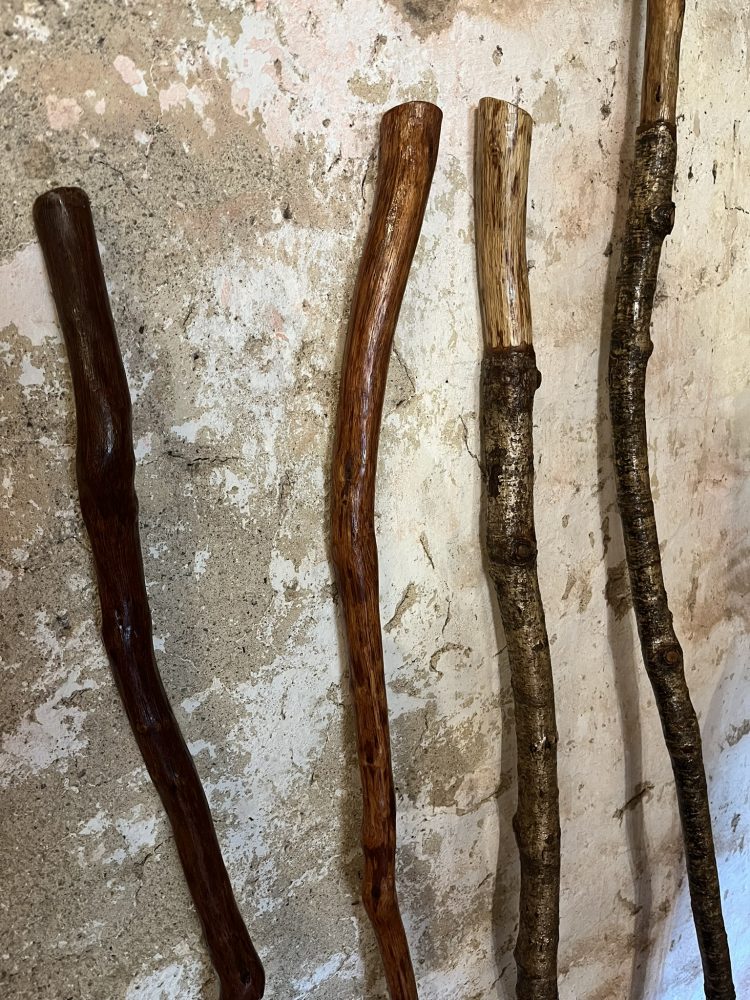
handmade wooden canes
One artist made walking sticks from the fallen branches.
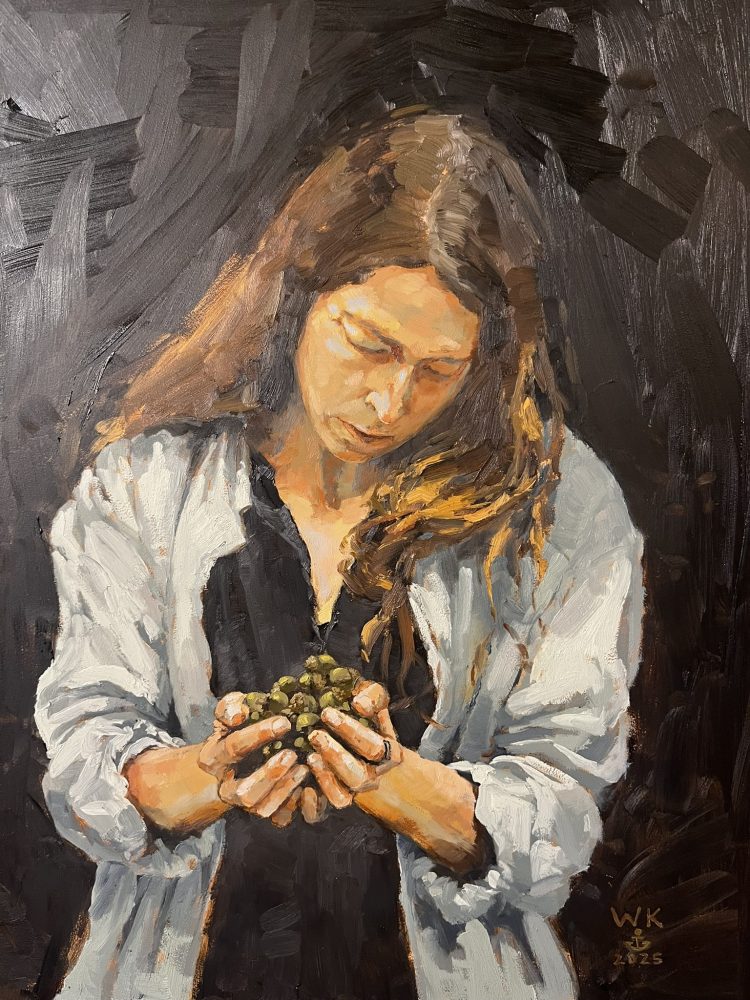
painting of woman holding acorns called abundance
Entitled “Abundance,” this painting featured a woman holding a handful of acorns.
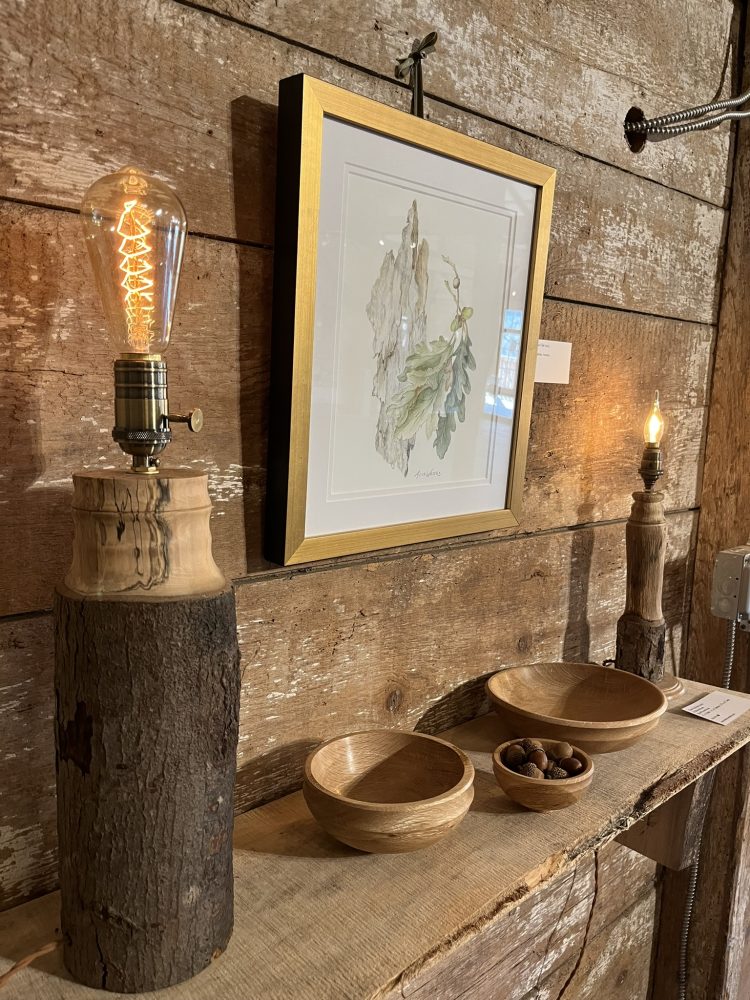
wooden bowls and candle holders with framed picture of oak leaf
Paintings and sculpted wooden pieces preserved the oak’s legacy.
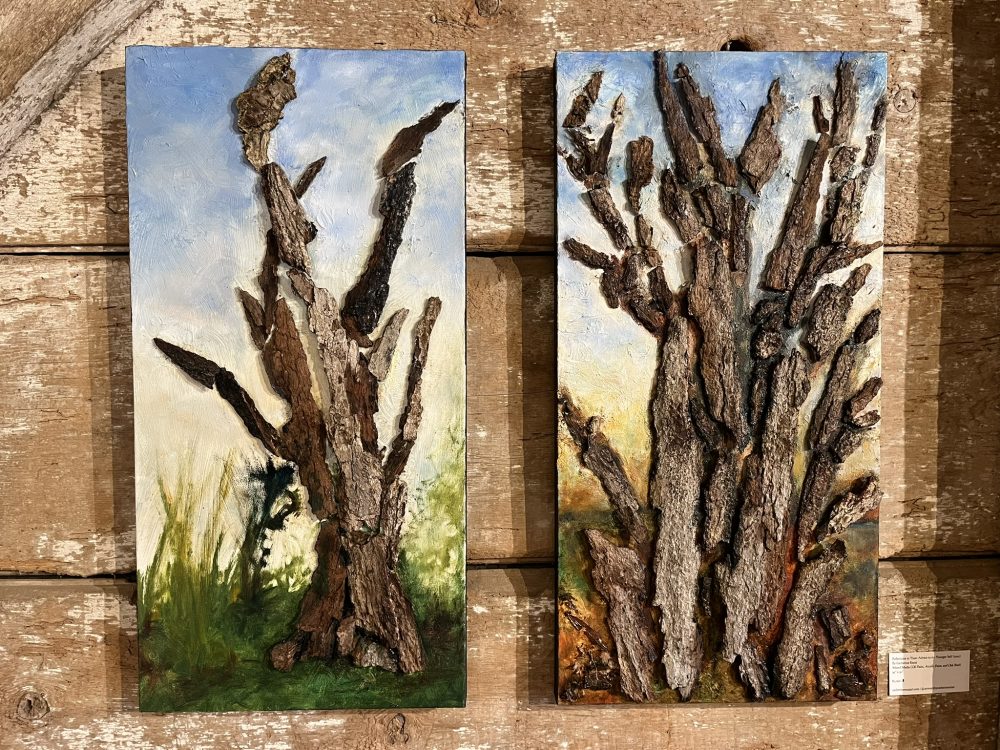
bark used to create images of tree
Bark from Anna’s oak formed images of trees.
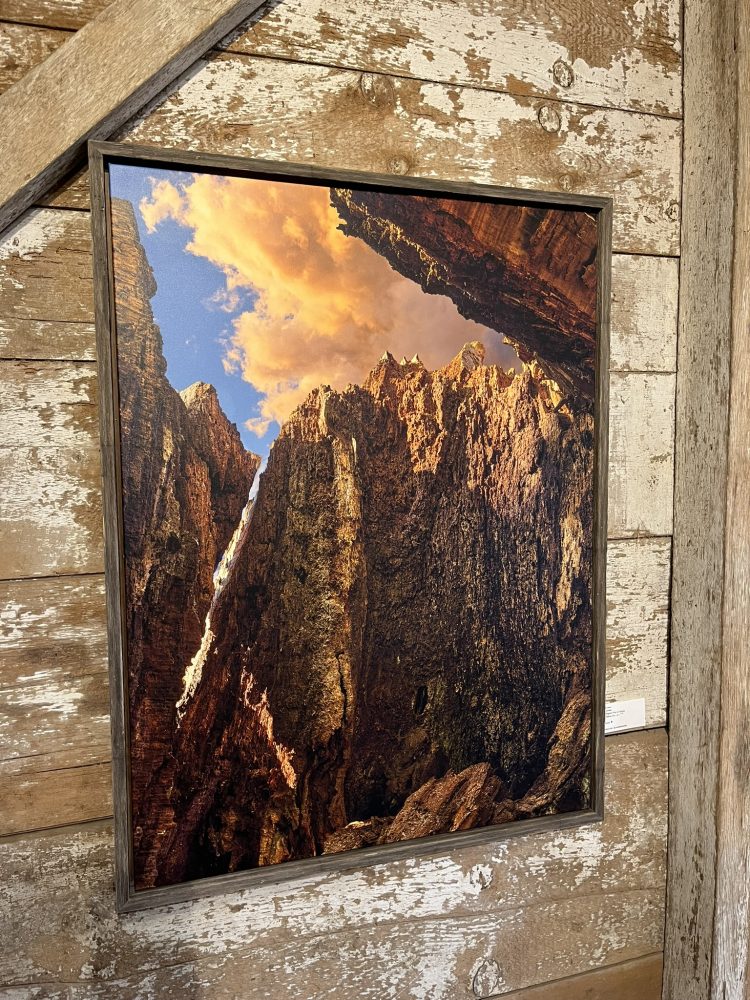
photo of inside of tree combined with image of sky
A photo taken inside the tree’s hollow cavity was paired with the image of a sky. The result was an image that looked like canyon walls.
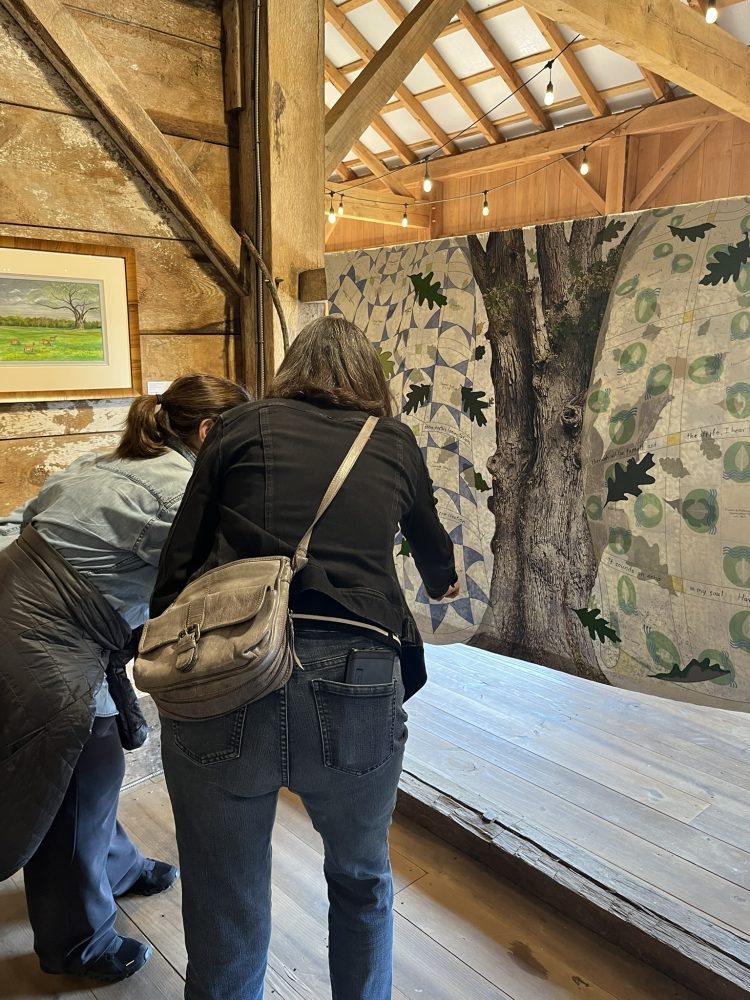
two women admiring the details of a quilt in a gallery
Visitors admired a quilt featuring the beloved tree.
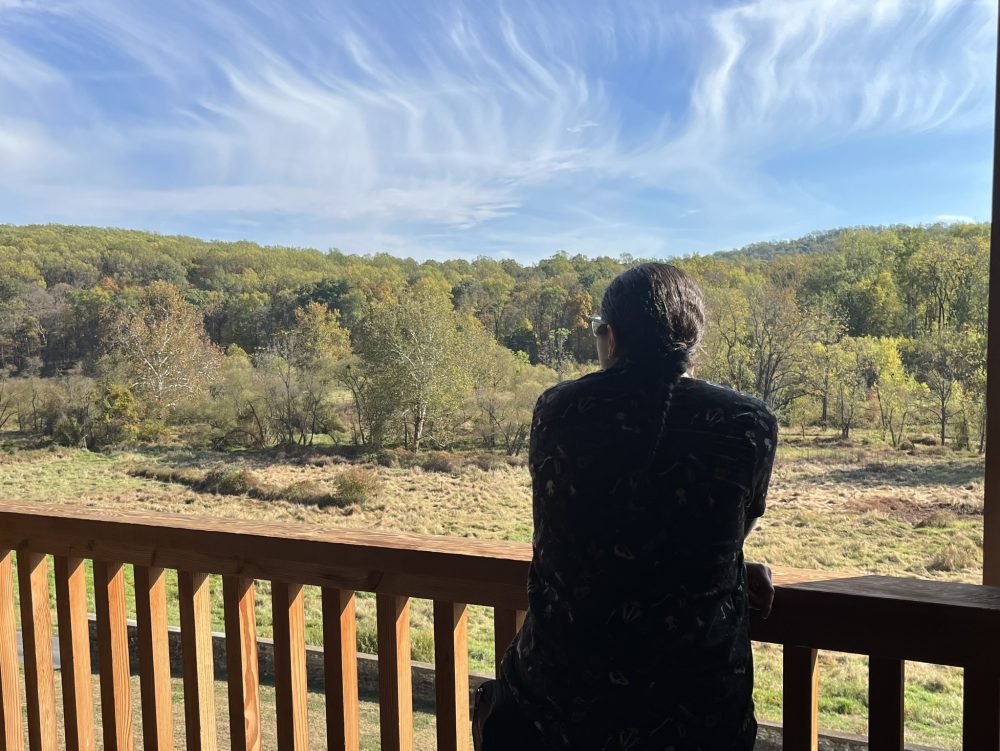
looking over field of trees in distance with railing in foreground
The gallery offered views of the surrounding landscape from a balcony.

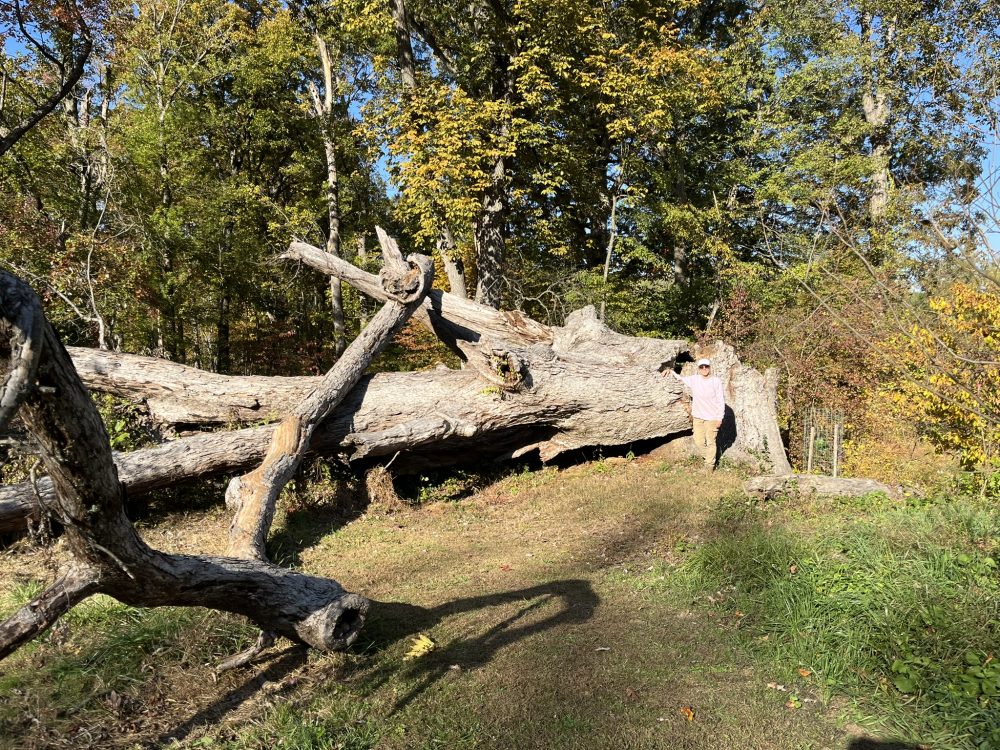
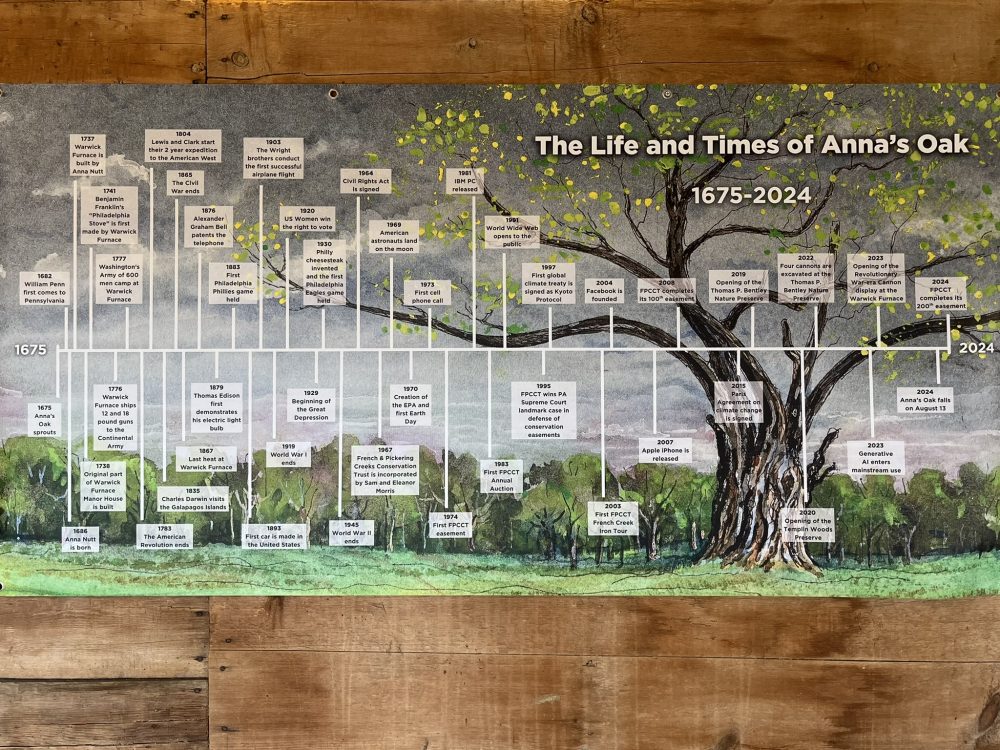
Anna’s Oak was believed to be Chester County’s largest living white oak. The tree likely took its name from Anna Nutt, founder of the historic Warwick Furnace. On Tuesday morning, August 13, 2024, the 350-year-old oak crashed to the ground because its trunk had become mostly hollow. Although I never saw the tree when it was alive, its 97-foot height and 264-inch circumference still impressed me as it lay calmly in the field.

person standing next to fallen oak in field
I felt small standing next to the fallen oak.
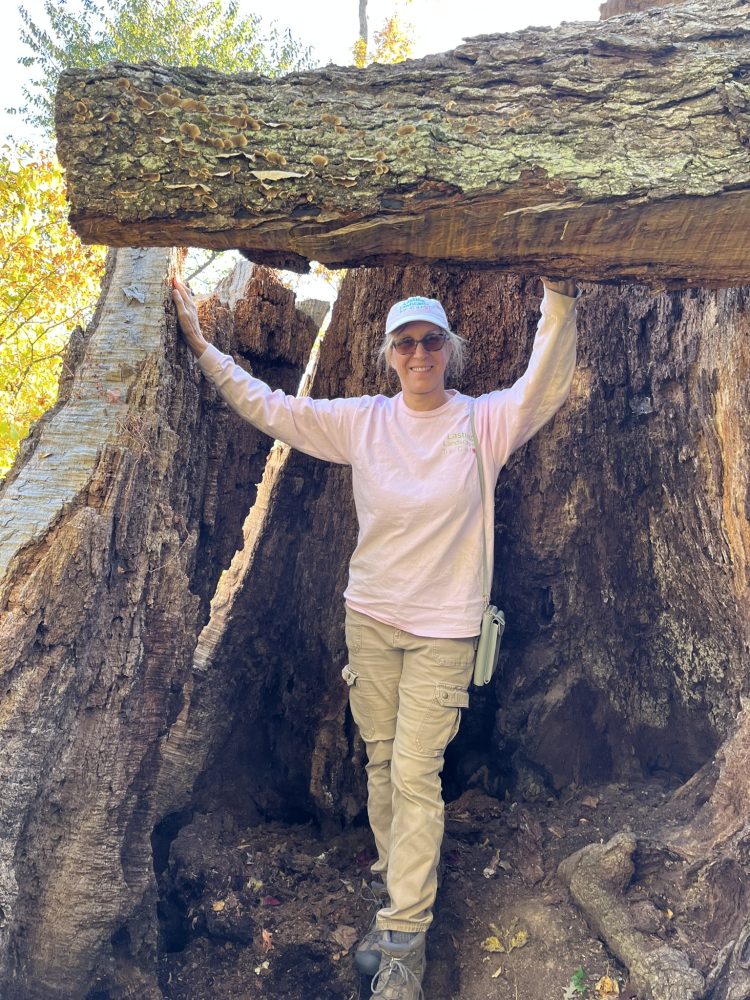
person in pink shirt standing inside fallen tree
I easily fit inside the hollow trunk that caused its demise.
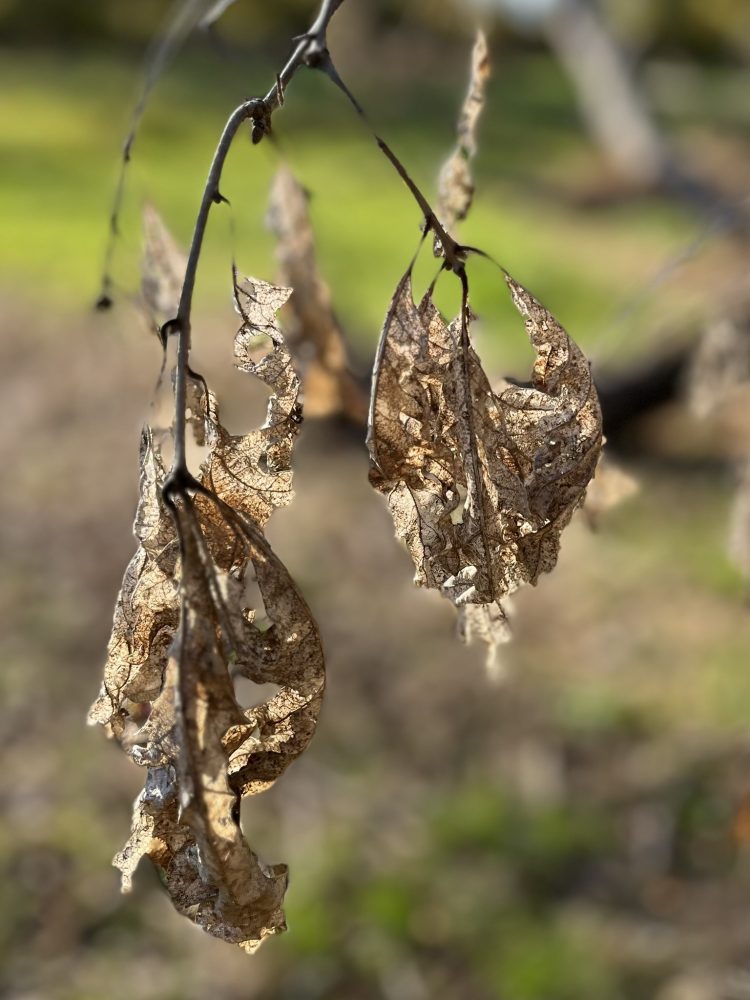
decaying oak leaves on branch
A few oak leaves continued to hang on to the dead branches.

I grew emotional as I viewed the exhibit and read the timeline of historic events the tree likely witnessed. The artwork moved me; it captured the spirit of the oak beautifully. I loved seeing how the tree lived on through art, and I felt comfort knowing its remains will nourish new life in the field where it fell. As my friend and I wandered around the site, we noticed new life already emerging—a couple oak saplings now grow proudly near the base of the original tree.

timeline showing events that occurred over life of historic oak tree
Anna’s Oak lived through so many years of historic events including William Penn’s first visit to Pennsylvania and the release of the first iPhone.
oak tree sapling in cage
This sapling represents new life and grows near the base of Anna’s Oak.

Seeing the majestic fallen oak made me reflect on my own garden and the trees I’ve lost during the 25-plus years I’ve lived in my home. One tree in particular—an ash—stands out. I remember my dad saying he hoped I’d never lose that tree, since its V-shape marked the garden as mine: the Verhake garden. Unfortunately, I eventually had to remove it, as the V-shaped union created a weak structure and arborists considered it likely to fail—a risk I couldn’t take.

v shaped tree in fog
The V-shaped tree I had to remove from my property.

Yet, like Anna’s Oak, my ash tree lives on. My friend Carlos Soler turned part of it into a set of bowls I cherish, and the stump grindings nourished the soil where other trees now thrive. As we enter a new year, I’m reminded to be like the trees: remember and honor the past, keep part of it alive, and embrace the new life a new year brings—a year rooted in what came before.


Lasting Landscapes by Carol

In with the Old

It’s a new year and that often means we discard the old and ring in the new. January 1 typically serves as a reset button where we let go of things that aren’t serving us and embrace positive change.

In this month’s blog I encourage you to embrace the old and recognize how important it is to do so. Of course, I’m talking about plants and specifically two trees – the American Elm (Ulmus americana) and the American Chestnut (Castenea dentata).

American Chestnut trees are functionally extinct, yet recently in some private woods in Delaware, a deer hunter spotted what appeared to be a mature Chestnut tree. After extensive evaluation, experts confirmed that this tree is in fact an American Chestnut with natural blight resistance.

Lasting Landscapes by Carol
Most Old American Chestnut trees like this one have vanished from the landscape.
Lasting Landscapes by Carol
American Chestnut in flower
Lasting Landscapes by Carol
A chestnut emerging from the burr

The reason the American Chestnut is so rare is because a blight mistakenly introduced in the 1900s killed 3-4 billion trees over a fifty-year period. In addition to the miraculous discovery of a living American Chestnut tree in the wild, researchers are busy breeding hybrid trees in an effort to introduce blight resistant varieties. Since the Chinese Chestnut is naturally blight resistant, it’s being bred to the American Chestnut. Researchers plant and evaluate resulting offspring. The goal of these breeding programs is to produce a tree that looks exactly like an American Chestnut but with blight fighting characteristics. To learn more, view these fascinating (to me) articles:

https://www.delawarenaturesociety.org/whyy-tv-features-coverdales-rare-adult-american-chestnut/

https://www.delawarenaturesociety.org/full-grown-american-chestnut-tree-whyy-article/

The American Elm suffered in a similar way to the American Chestnut. In 1930 the Dutch Elm fungus was introduced to the US by accident through a shipment of logs imported by a furniture maker. Fortunately, breeders have introduced some disease resistant cultivars to the trade. You’ll likely be able to find Ulmus americana ‘Valley Forge’ and ‘Princeton’ at a nursery near you. I planted the Princeton cultivar on my property this year since I’m striving to maintain a high canopy and feel a diverse selection of trees is paramount to my success.

Lasting Landscapes by Carol
Stately Elms stood proud in our forests.
Lasting Landscapes by Carol
Landscapers often planted Elms as street trees and to form allees.
Lasting Landscapes by Carol
The striking form of Elm leaves.
Lasting Landscapes by Carol
A Princeton Elm for sale at a local nursery.
Lasting Landscapes by Carol
A disease resistant Elm featured at a trade show.

I encourage you to plant a variety of trees on your property for your own pleasure and for the health of our planet. According to an article by Suki Casanave, a single large American elm, located on the southern side of a home, can intercept 2,384 gallons of storm water, conserve 107 kWh of energy, and sequester 518 pounds of CO2 annually. Since our native Ash and Red Oak trees are succumbing to pests (Emerald Ash Borer) and pathogens (Bacterial Leaf Scorch), the time to plant is now. Get out there. Hug a tree and most importantly plant one.

IMG_20190624_062752

Rising from the ashes

When I first bought my property nearly 19 years ago, I was thrilled with the woodland setting and adored my many deciduous trees. But then I was made aware of the ash borer, an uninvited pest from Asia, and I became distraught over the 24 ash trees on my property and their pending demise if left untreated.

I consulted an arborist and together we determined it made sense to protect 10 of the trees with regular injections, while removing the rest. Over the last several years I have been removing trees. Some of the ash trees I removed were quite large, which meant I had a lot of ash wood to deal with and that’s where I had to get creative.

Cherished bowls made from ash trees on my property

With the first batch of ash trees removed, I asked Carlos Soler, a family friend and amazing woodworker to make wooden bowls for me with some of the remnants. Carlos did an amazing job and I cherish the bowls for their beauty, function and remembrance. You can find other artistic treasures made by Carlos by visiting his site on Etsy https://www.etsy.com/shop/CSWoodworks1?ref=search_shop_redirect.

Of course I saved some of the wood for firewood and gave a bunch to friends for the same purpose. But I quickly realized only a certain amount of firewood could be used in a reasonable time without most of it rotting. I still had a lot of wood to manage.

During a visit to Cape Cod a couple of years ago, I saw an amazing natural arbor at a local botanic garden. I showed the photos of the arbor to local chain saw artist Marty Long who was able to translate my vision into reality with collected branches.

An arch made from branches marks the entrance to the woods

In addition to my arch, which now marks the entrance to my woodland trail and invites guests to meander, Marty made a bench for me which I enjoy regularly. Yes, I actually do sit down from time to time – hurray! My new bench provides a great vantage point of the water feature and the woodland trail and gives my friends and me a place to pause, relax and enjoy.

An ash tree transformed into a bench

The last thing I have done with my ash trees is to leave some of them standing about 20 feet tall. This way they are not a hazard to garden visitors, can easily be taken down from the ground if they become a concern, and can benefit wildlife as they decay. Plus, it’s less expensive to take down a tree partially instead of completely!

Trees left standing

My point is, when life gives you lemons, or an invasive pest like the ash borer, you need to find a way to make lemonade. If you have ash trees that need to be removed, let me know how you are dealing with the issue. I am confident if you look hard enough, you’ll find the silver lining and ways to use that wood that enhances the beauty of your garden, provides ecological benefits and more.


trees-2Blet-2Bgo.jpg

Seeing the Forest and the Trees

Trees are my focus for this month. How can we not think about trees in October? They are turning beautiful hues and showing us how nice it can be to let go. 


Trees have also been on my mind because I recently attended a lecture given by Joan Maloof, author and founder of the Old-Growth Forest Network (OGFN). The mission of the OGFN is to connect people with nature by creating a national network of protected, mature, and publicly-accessible native forests. 
The organization was created because many of the old-growth forests were being logged, developed or otherwise destroyed. The OGFN strives to preserve the remaining old-growth forests in thousands of counties in the United States so all generations can experience a real forest and its native biodiversity.  
Joan’s lecture was given at Haverford College, which hosts an arboretum and some amazing specimen trees. After her lecture I felt inspired and decided to take advantage of the opportunity to sit underneath an elm tree that was a direct descendent of the Penn Treaty Tree. What a magical experience that was. Incredibly peaceful and calming. A ‘stop and smell the roses’ kind of moment.
Official designation for the Haverford Elm

Sitting under the Penn Treaty Elm

Looking up into the branches

Another amazing tree I saw recently was located in Tarrytown, NY at the Lyndhurst estate, former home of New York City mayor William Paulding, Jr., merchant George Merritt, and railroad tycoon Jay Gould. Check out this awe inspiring weeping beech tree! You can barely see me in the photo. 

Lyndhurst’s enormous weeping Beech

My next stop to admire trees was Boise, ID – known as the City of Trees. Boise is set in the foothills, which typically consist of grasses and sagebrush, not trees. Early homeowners were encouraged to improve their property with shade trees, which they did. 
The tree-lined Boise River

Trees all over the world have great lessons to teach. I’m certainly not the first to observe this fact. Oscar-winning actress Judi Dench loves trees so much she produced a documentary called ‘My Passion for Trees’. Filmed over the course of a year, the documentary studied trees throughout the seasons and helped Judi use science to tell the stories the trees can’t tell on their own. Judi saw trees in a new light and learned how they communicate with each other and deal with adversity. For Judi and for me, trees aren’t just trees. They are a community of living things who support each other and help us as human beings. 

I hope you’ll join me in living life according to some advice from a tree:

Advice from a Tree

Stand up tall and proud,

Sink your roots into the earth,

Be content with your natural beauty,

Go out on a limb,

Drink plenty of water,

Remember your roots,

Enjoy the view!

Ilan Shamir