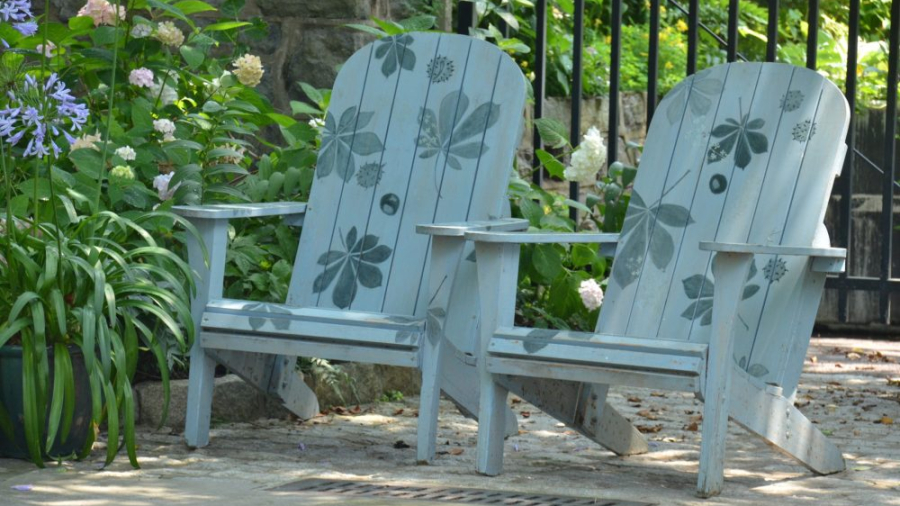
two adirondack chairs painted with flowers with a metal fence behind

Talking with Myself

I enjoy listening to garden-related podcasts in my spare time. Marianne Willburn and Leslie Harris educate and entertain on The Garden Mixer. Stephanie Mahon, editor of Gardens Illustrated, a UK-based magazine, interviews a wide range of horticulturists and garden designers on her podcast, Talking Gardens.

While Marianne and Leslie vary their topics and discussions from week to week, Stephanie asks every guest the same set of questions, which got me thinking. If Stephanie were to interview me, how would I answer?

Since the likelihood of Stephanie contacting me for an interview is slim, I decided to interview myself instead. I hope you enjoy my conversation with me!

Q: Which garden you’ve experienced would you have to include in your dream garden?
A:
I would have to include elements of Chanticleer, Stoneleigh, and Longwood in my dream garden. I love the courtyard and gravel gardens at Chanticleer, along with the sweeping views that seem to stretch for miles. I also admire and use the many seating areas that provide magical perches from which to enjoy the landscape. Having the majestic mansion at Stoneleigh would be lovely, and I applaud their inspired use of native plants. Longwood’s conservatory would also earn a place in my dream garden. It would allow me to move from the tropics to the desert without ever leaving home.

stone mansion with tall evergreens in front
I think I could live with a mansion like this as part of my dream garden.

Q: If you could choose any design element or feature you’ve seen that you’ve always coveted, what would it be?
A: I’ve always been drawn to ruin gardens. There is something undeniably magical about them, and I would love to include a touch of ruin in my dream garden.
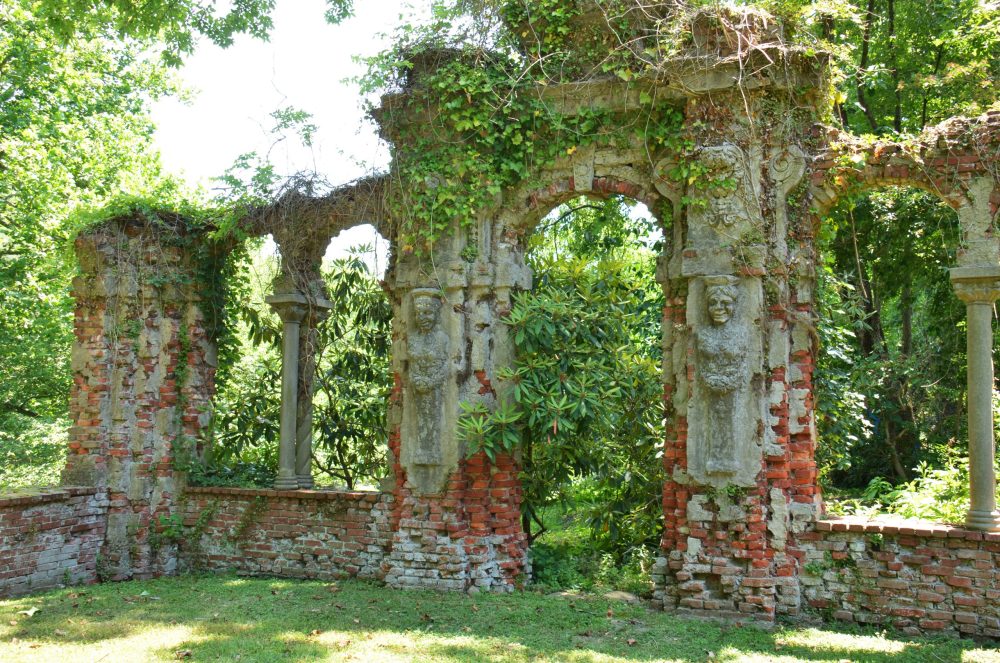
brick columns in a ruin garden covered in ivy
Ruins like this one offer a sense of mystery. I love that in a garden.

Q: If you were to choose a natural landscape—somewhere you love to visit or have seen on holiday—to include in your dream garden, what would it be?
A: I would welcome a wetter area in my garden like some of the bogs and ponds I have seen in my travels. My current garden is very dry, so moisture-loving plants struggle to thrive. I would also love a cliff face. In fact, I think it would be wonderful if my entire garden were surrounded by cliff walls instead of fencing—enough to keep the deer out, but not so high that they block the borrowed views of gorgeous valleys or meadows beyond. You did say “dream,” right?
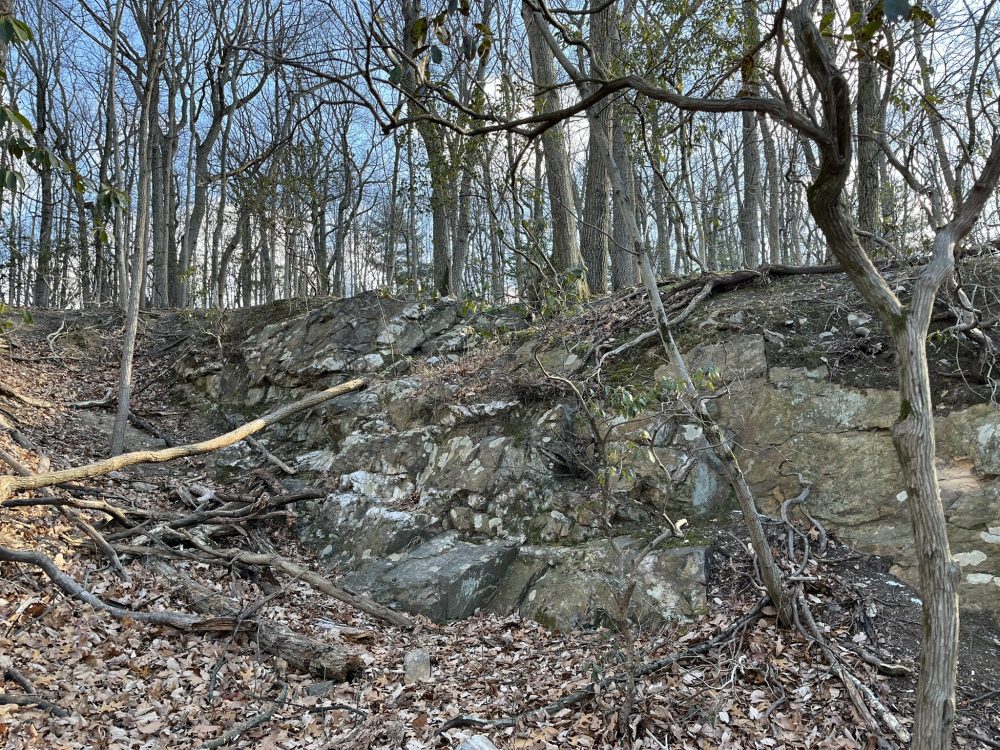
large boulder outcropping in a deciduous forest
A large rock outcropping like this one would suffice as a ‘cliff’ wall to surround my property without blocking the borrowed views beyond.

Q: If there were a person you would like to invite into your landscape—as a head gardener, designer, or simply a visitor—who would it be?
A: I enjoy being my own designer and head gardener, but I routinely welcome visitors. Anyone with a genuine desire to experience the garden is welcome.

I wish my parents and grandparents could see the garden as it is today—to witness how it has evolved over the years and to understand the influence they had on me becoming a gardener. I would also love to meet Gertrude Jekyll and give her a tour. Alan Titchmarsh and Carol Klein, BBC personalities who both understand that a garden is a process rather than a project, would be engaging visitors whose insights I would love to hear.

Q: If there were one plant, or group of plants, you absolutely had to have in your dream garden, what would it be?
A: There are so many plants I would struggle to live without, but if I had to choose just one, it would be Osmanthus. They are evergreen, deer-resistant, fragrant, and available in many different forms.
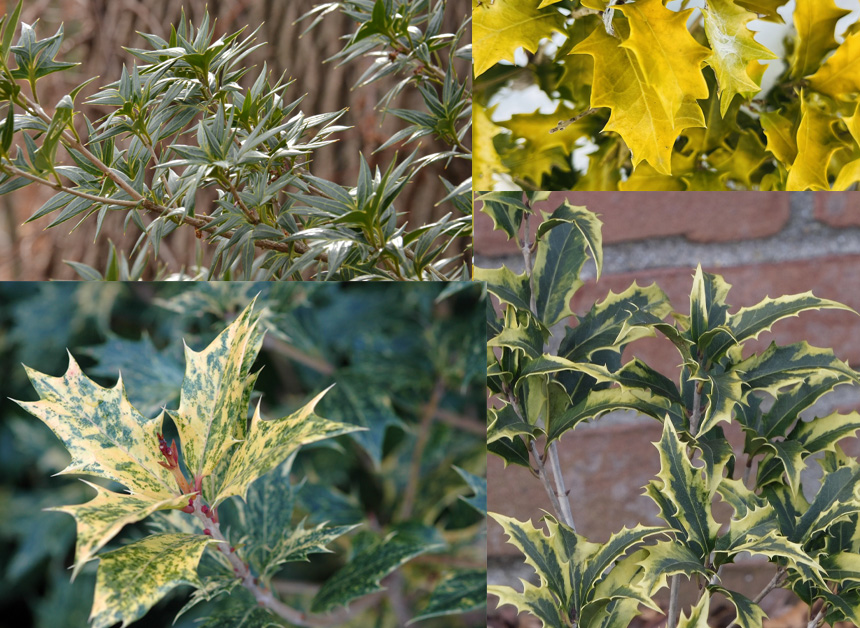
a collage of photos of osmanthus plants in varying colors of green and yellow
Some of the Osmanthus plants I couldn’t live without.

Q: And if you had to choose something you would not allow in your dream garden, what would it be?
A
: I would ban violent weather—no more tornadoes, bomb cyclones, or straight-line winds. Regular rain would be welcome, as extended periods of drought are draining for both the plants and the gardener. I would also keep out plastic plants and people who are negative, disrespectful or judgmental.

Q: If I gave you three small pleasures to take with you into your garden, what would they be?
A:
First, people to enjoy the garden with me. Second, a water feature to soothe my soul and attract birds and other wildlife. And third, a covered area where I could enjoy the garden rain or shine.

I’m proud to say I already have all three in the “dream” garden I’ve built—the place I call Boulder Haven. My happy place.
Lasting Landscapes by Carol

Learning from the Experts

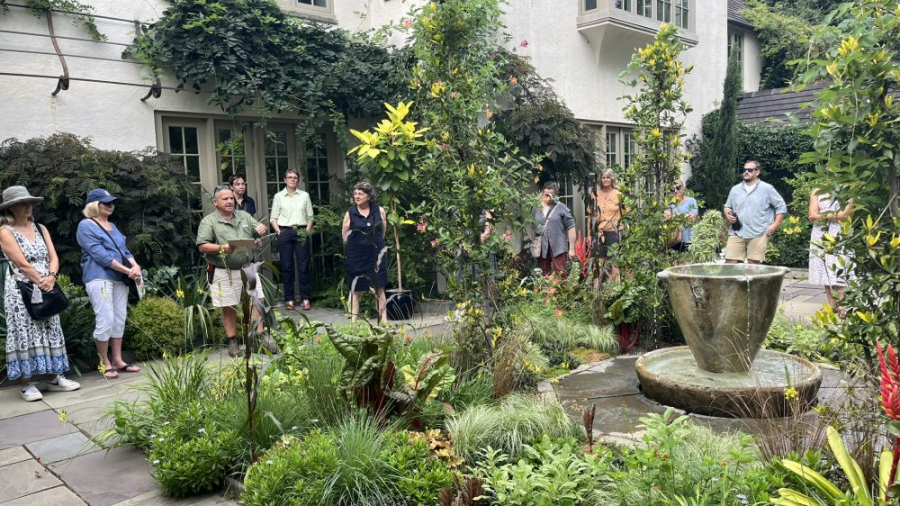
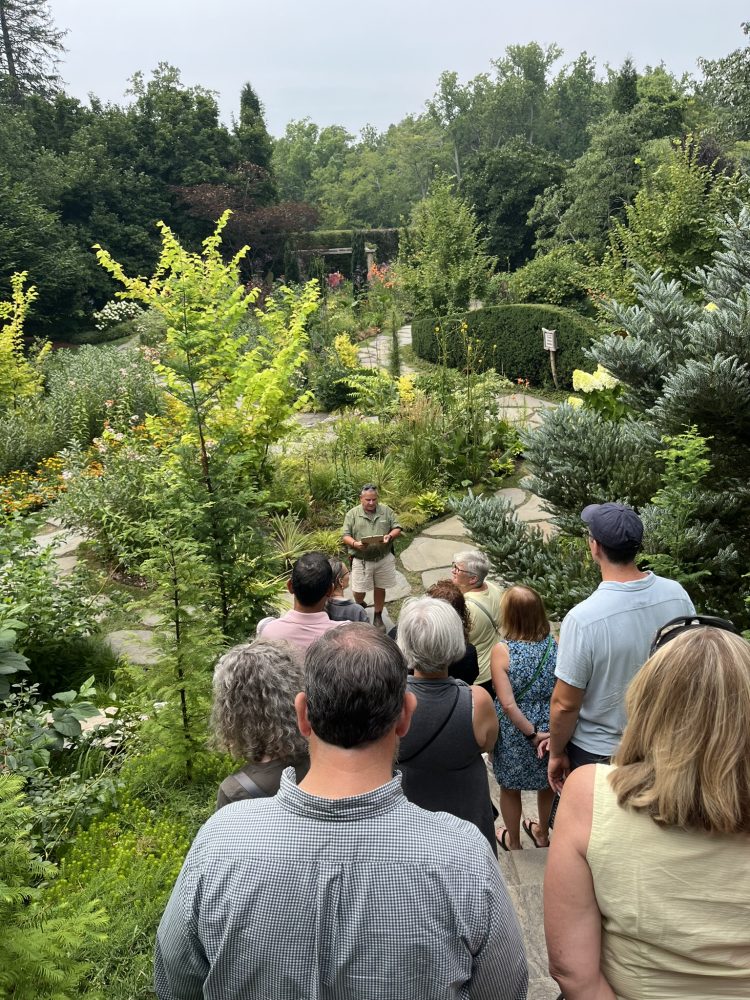
I recently had the opportunity to learn from some amazing horticulturists during an event at Chanticleer. The evening began with a garden walk led by Chanticleer’s own Dan BenarcikAnnie Guilfoyle, renowned UK garden designer, followed Dan with a talk on ‘What Makes a Garden Great.’

Lasting Landscapes by Carol
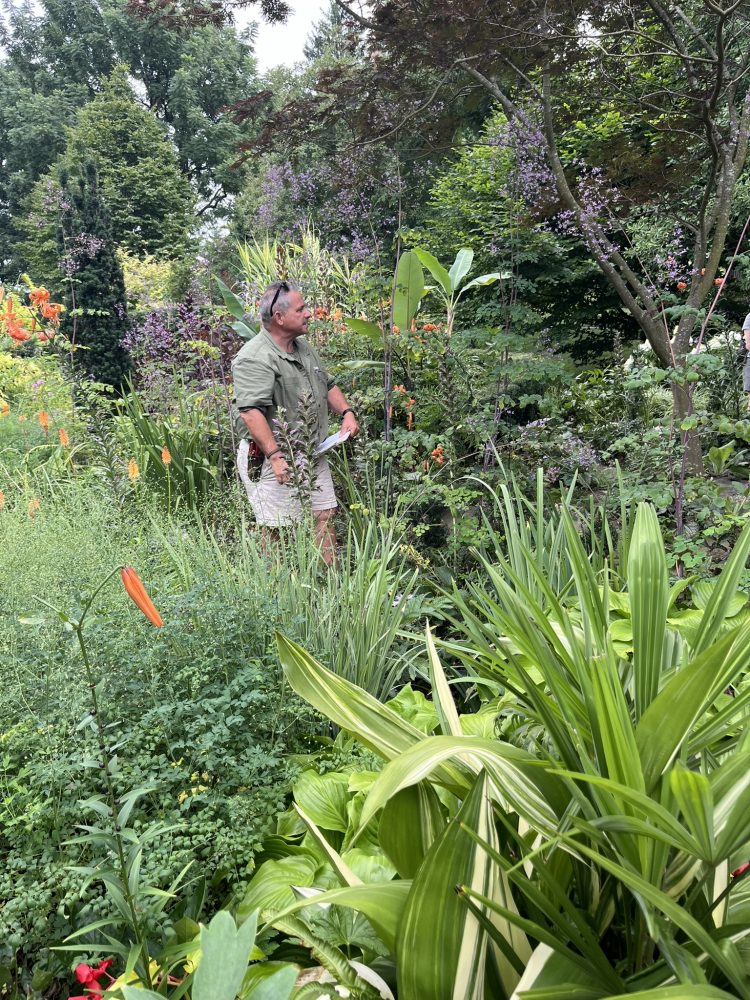
Attendees happily followed Dan into the garden to hear his recommendations for making a great garden space.

I thoroughly enjoyed learning the perspectives of these talented industry professionals. As we wandered through gorgeous Chanticleer, Dan talked about how the gardens constantly evolve in color and form. He encouraged us to focus on creating an ever-changing landscape that keeps things interesting and dynamic. He also suggested pressing the reset button from time to time to completely revamp a garden area if needed.

Lasting Landscapes by Carol
Clearly Dan’s vision and design strategies work. This perfectly woven tapestry of color and texture says it all.

Dan recommended attendees test the limits of plants and use them to provide focal points, create different views, or add repetition and flow to an outdoor space. Tropical or architectural plants like Agave and Banana make impressive statements. Adding a plant that has a similar form to an architectural component (like a column) is a special way to add interest and emphasis.

Lasting Landscapes by Carol
The bold textures of tropical plants create focal points in the landscape.
Lasting Landscapes by Carol
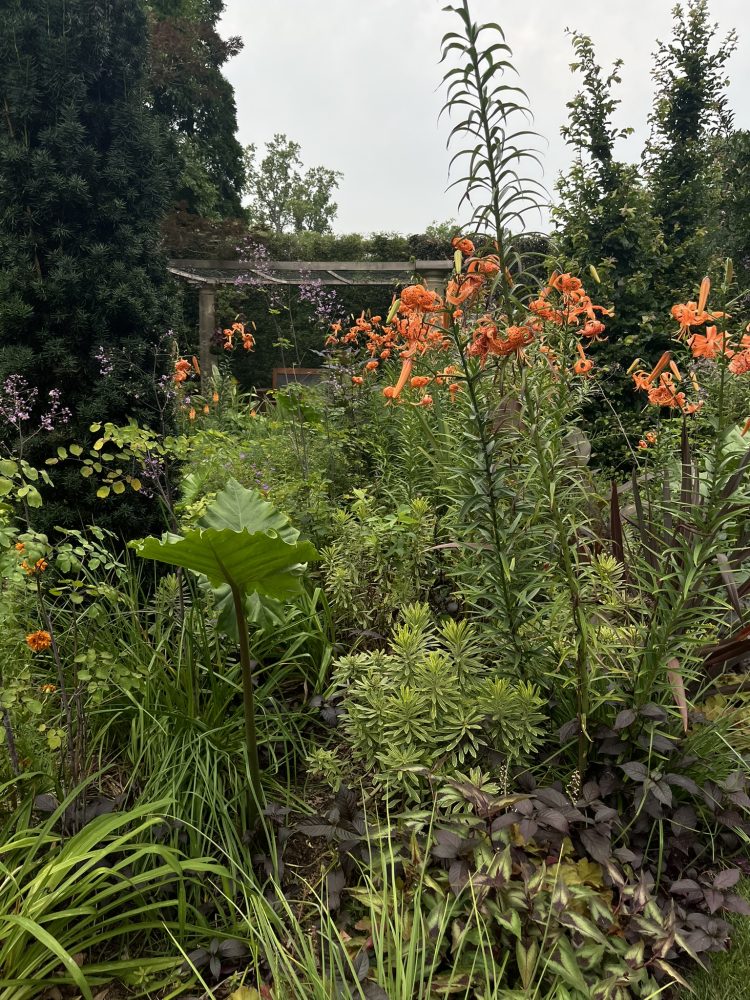
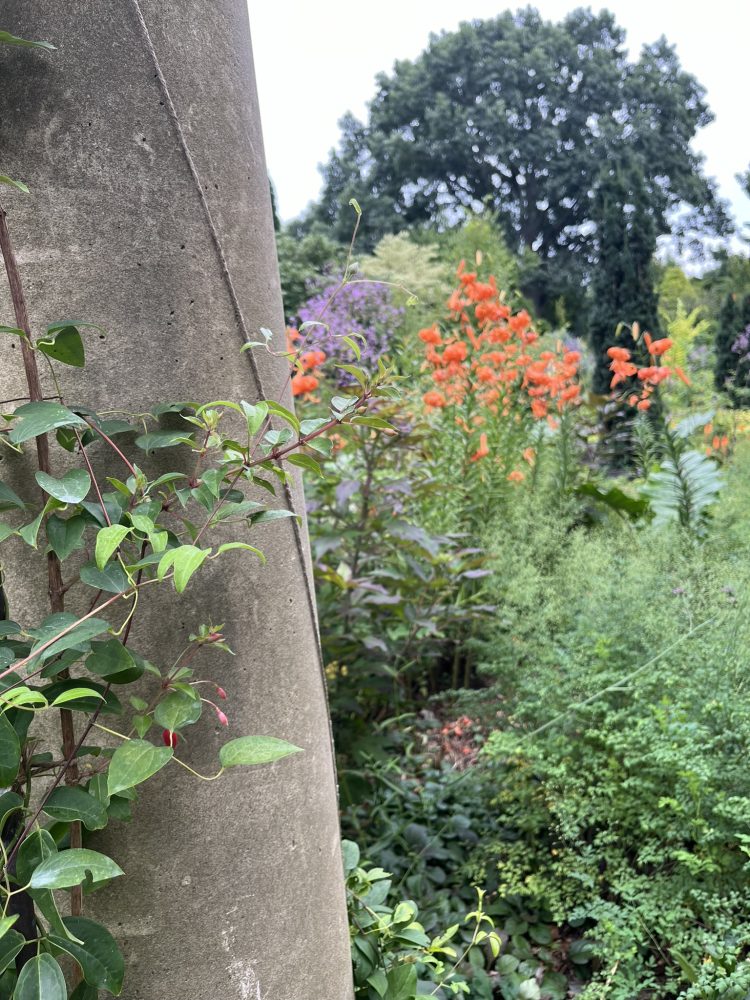
With columnar structures themselves, Thalictrum and Lilium perfectly accent the garden’s architecture.

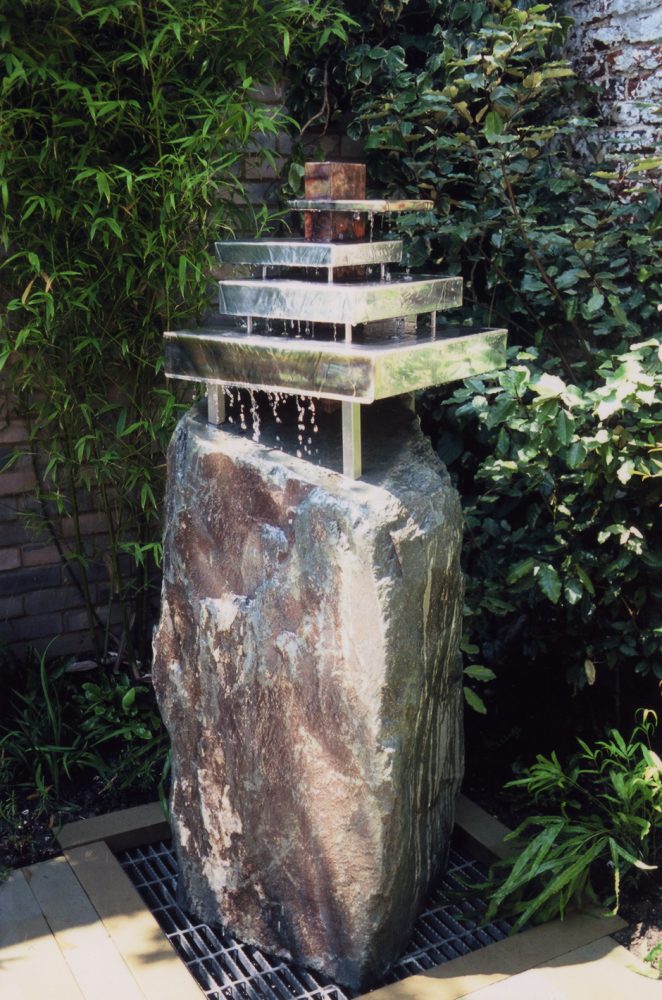
When Annie spoke, she also emphasized marrying architecture to the garden. She suggested using art as inspiration for garden components like sculptures, fencing or even the layout of a bed. In episodes of Small Town Gardens, where Annie designed different gardens in the UK, she put this principle into action. She installed wall art inspired by a painting and implemented a water feature that looked like a replica of Frank Lloyd Wright’s Falling Water.

Lasting Landscapes by Carol
Annie’s magical Falling Water sculpture brought the client’s favorite architect directly to her garden. Photo credit: Annie Guilfoyle

Annie feels gardens are also about people. People who grow or gift plants. People who put their unique spin on a place and let their personalities shine through in the landscape. In addition to making a space personal, Annie reminded the audience that bulbs and shrubs should be included in every garden as a way to extend the season and make the garden more special.

Lasting Landscapes by Carol
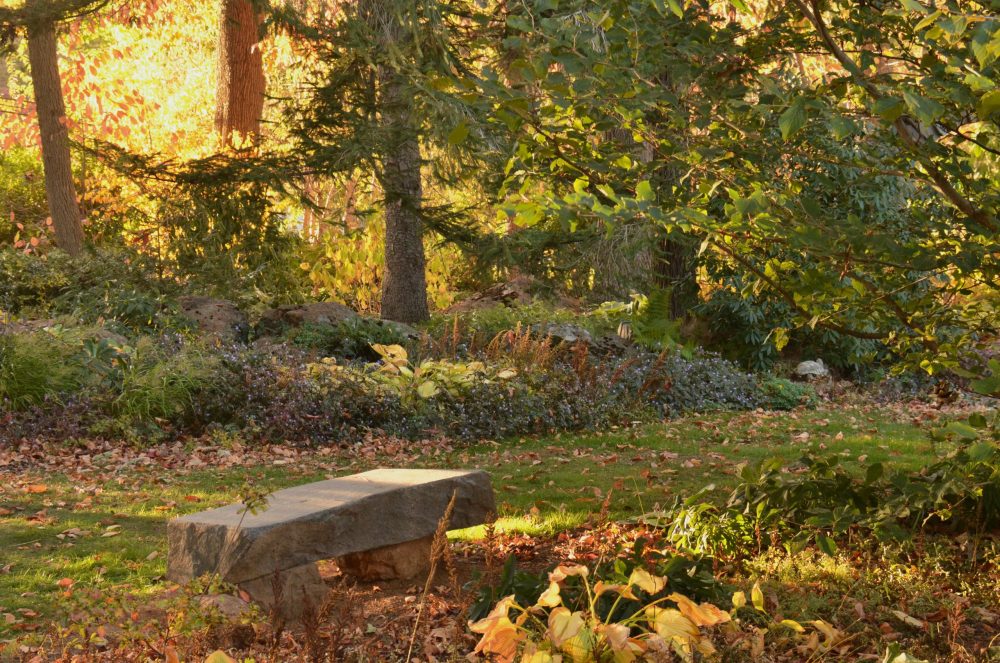
My new stone bench serves as functional art in my garden.

I walked away from my evening with Dan and Annie feeling renewed and motivated. I could feel them cheering me on as I planted bulbs, added a new stone bench based on the boulder ‘art’ in my garden and totally revamped a garden area by removing some water-hogging hydrangeas and replacing them with a variety of drought tolerant plants better suited to our current climate. When you have the opportunity to learn from experts like Dan and Annie, don’t hesitate. You will be grateful for the time spent and inspiration gained.

Lasting Landscapes by Carol

October Skies

Despite the overwhelming number of tasks facing gardeners like me in the fall, I adore the autumn season and the blooms that come with it. You heard me right – amazing blooms in the fall provided by Asters, one of my favorite perennials.

‘October Skies’ Aster (Symphyotricum oblongifolium) is a wonderful variety that grows about two feet tall and wide. I planted some on my sunny bank last fall and cut them back by half in June to help ensure a dense habit. Today they are putting on quite a show.

Lasting Landscapes by Carol
Aster ‘October Skies’ planted en masse.

‘Raydon’s Favorite’ is very similar to October Skies but in my experience is a bit taller and darker in color, topping out around three feet. Raydon’s Favorite also blooms later than October Skies, which helps to ensure a long-lasting flower show. Both October Skies and Raydon’s Favorite are colorful, deer resistant groundcovers.

Lasting Landscapes by Carol
Aster Raydon’s Favorite pairs beautifully with Tricyrtis.

Recently I was introduced to another Aster – Aster ericoides ‘Snow Flurry,’ a diminutive form reaching several inches high with petite, white blooms. Snow Flurry will spread to a two-foot mass and is lovely in the front of the border or in a rock garden.

Lasting Landscapes by Carol
Aster Snow Flurry has a compact habit with pristine miniature blooms.

Got shade?  No worries. There is an Aster for you too.  Aster divaricatus thrives in my dry shade garden and spreads around readily. If you have limited space, why not choose Ampelaster carolinianus, a climbing aster that happily rambles on a trellis or a fence. Mine bloomed in the winter last year.

Lasting Landscapes by Carol
Aster divaricatus
Lasting Landscapes by Carol
Ampelaster carolinianus climbs on structures and blooms late

Maybe you are lucky enough to have a large, sunny spot and room for a meadow. Aster laevis is a great option for that situation. Pops of purple and blue on three-foot stems really stand out among the seed heads of grasses.

Lasting Landscapes by Carol

All of these Asters are native to North America so what’s not to like? If you haven’t already introduced Asters to your landscape, I encourage you to do so. If you are already in love with Asters – please comment and let me know which ones you adore and why!

Lasting Landscapes by Carol

Pretty as a Picture

For years I have been making a photo calendar with images from my garden. I looked at all of them recently and noticed some consistent components, but also many additions and changes. The continual rebirth of the garden is something I love along with the joy that comes from taking note of every moment and every season.

Lasting Landscapes by Carol
My winterberry holly has brought me (and the birds) joy for years
Lasting Landscapes by Carol
Anemone Honorine Jobert and Aronia pair perfectly for fall interest

September is a notoriously busy month for gardeners. We dig, divide, plant, move and tidy up.  This process brings us peace and fills us with anticipation for spring and the realization of our new vision.

Lasting Landscapes by Carol
Last fall I added some Chelone from a friend who was thinning theirs out. I love the combination of Chelone and the fall color of Viburnum nudum.
Lasting Landscapes by Carol
Bulbs bring recurring joy to gardeners. Colchicums peek through the foliage of other plants.

I encourage you take time during the fall season to capture some garden moments for yourself. Either take mental images or photos to record what’s happening in your landscape. Then repeat textural or color combinations that are working and address plant combinations or spacing that no longer make sense. Consider adding some plant material too. There are always new plants coming to market that have interesting colors, shapes, blooms or other desirable characteristics. I continue to remove more lawn and add more gardens. Feel free to follow in my footsteps if you like.

Lasting Landscapes by Carol
I added Helenium to my containers this year and will use them again next year. I adore the look. A wonderful alternative to mums.
Lasting Landscapes by Carol
My new Metasequoia ‘Soul Fire’ looks magnificent as a backdrop to Physocarpus ‘Summer Wine.’
Lasting Landscapes by Carol
A year ago I removed a large section of lawn that I tired of mowing. Now it’s filled with sun loving perennials like Molinia ‘Sky Racer’ and Scuttelaria incana.

Promise me you will take time to enjoy playing in the garden during the frenzy of the fall. Take it from me, it’s a lot more fun that cleaning windows or changing out your wardrobe for the winter months. I hope you will share your garden changes and additions with me. I’d love to hear what you are doing.

Lasting Landscapes by Carol

Pretty pairings

Spring is a busy time of year in the garden.  Not just for gardeners, but for the plants themselves. Blooms burst and colors explode.  Each day something new emerges.  A fiddlehead, a bud, a new leaf.  I take notice of the details and the overall scene. In particular, I observe combinations that work.

Dark colors contrasted with lighter make for an impressive display. The burgundy foliage of the Japanese Maple is stunning paired with the Phlox subulata that will eventually cascade over the stone wall.

Lasting Landscapes by Carol

The brilliant dark blue of Aguilegia (Columbine) stands out against the lime green foliage of an Ilex verticillata.

Lasting Landscapes by Carol

Iris ‘Immortality’ appears illuminated against the backdrop of Penstemon ‘Husker Red.’

Lasting Landscapes by Carol

Soft colors and textures look great together as well. A peach Iris balances the pubescent leaves of Lamb’s Ear (Stachys).

Lasting Landscapes by Carol

Garden ornaments perfectly complement plants too.  An elegant stone maiden is right at home amid some Pieris japonica.

Lasting Landscapes by Carol

A cast sunflower leans into a nearby tree peony (Peonia suffrictosa) as if to say hello.

Lasting Landscapes by Carol

Different textures combine beautifully in the garden like Allium Globemaster with Comfrey Axminster’s Gold (Symphytum).

Lasting Landscapes by Carol

Other winning combinations include the use of a common color.  The purple flowers of Epimedium ‘Making Waves’ echo the purple veining in Japanese Painted Fern (Athyrium niponicum ‘Pictum’).

Lasting Landscapes by Carol

The Lavendar flowers of Erigeron pulchellus ‘Lynnhaven’s Carpet’ blend seamlessly with the purple blooms of Mazus reptans.

Lasting Landscapes by Carol

What are you noticing in the garden? I’d love to hear the winning combinations you’ve created or witnessed during this spring of quarantine.

Amsonia hubricthii

Cutting a new garden instead of the lawn

In the April 2019 issue of Fine Gardening Magazine, Editor Steve Aitken shared his thoughts on the significant moments in time that shape our evolution as gardeners. I had to chuckle at his comment that a true gardener would explain to a non-gardener that “The lawn is just the place you stand when looking at your plants.”

As a passionate plant person, I am often tempted by plants at the nursery. I’ll see a new perennial, tree or shrub and think to myself, “I have to have one of those.” This addiction of sorts explains why I continue to remove more lawn and add more gardens. Some of my friends think I’m crazed to add more beds to maintain in my 1.3 acre garden, but I find joy in the new plantings and feel the reward of the continually changing landscape is worth the effort.

To that end, this year I added a bed over 100 feet long which parallels a wall at the front of my property. On a slope, this new area has sections in shade, part shade and full sun and is well drained. The best part about developing this space into a garden is that I no longer have to mow on a hill, which was becoming harder and more dangerous the older I got. Sounds like a good reason to remove tons of sod, don’t you think?

Newly installed garden bed on a slope
My newly installed garden bed with many of the new plants in place.

I planted some favorites like Helleborus HONEYMOON® ‘New York Night’, Deutzia ‘Nikko’, Amsonia hubrichtii and Lonicera pileata ‘Moss Green’. I also added some new plants including Penstemon ‘Black Beard’, Lespedeza thunbergii ‘Gibraltar’ and Diervilla ‘Cool Splash’. I incorporated Pycnanthemum muticum, Agastache ‘Blue Fortune’ and  Aster ‘October Skies’ to attract pollinators and Molinia ‘Skyracer’ as a ‘see through’ plant. Some wonderful nursery friends gave me unique specimens including Indigofera kirilowii and Hypericum x Blue Velvet™ and I’m saving space for a Cercis ‘Flame Thrower®’ which I am hoping will be available in 2020. Is that enough Latin for you? Are your eyes glazing over yet?  How about if I stop my plant talk and share some photos of these beauties so you can see why I am so enthralled!

Agastache Blue Fortune
Agastache ‘Blue Fortune’ blooms from mid-summer into fall and attracts many pollinators
amsonia hubrichtii
Amsonia hubrichtii was the 2011 Perennial Plant of the Year and is a favorite in my garden. The fall color can’t be beat.
Chinese Indigo
Indigofera kirilowii (Chinese Indigo) has Wisteria-like pink flowers in the summer and showy yellow leaves in the fall.
Diervilla Cool Splash
Diervilla Cool Splash adds nice contrast to the border.
Molinia Skyracer
Eventually the tall plumes of Molinia ‘Skyracer’ will steal the show when backlit by the sun.
Mountain Mint
I’m very excited about Pycnanthemum muticum and its ability to attract pollinators.

While the new bed is immature, I look forward to seeing the plants grow in the years to come. I promise to share my triumphs and my trials. After all, that’s what gardening is all about. We collaborate with Mother Nature and make adjustments as needed to achieve the desired aesthetic. Now like a true gardener, I will prepare the garden for winter and patiently wait for spring!

Foxglove

Dare to Be Wild

I love the spring for so many reasons.  For the magic of the garden exploding in color and form, for the birds nesting and tending to their young, and especially for the warmth of the sun after a long, cold winter.

But there are a few things about spring that bother me besides spring cleaning and tax season. I trust you won’t be offended when I share my opinions on the wildness of things. If you are one who trims shrubs into balls or lollipops or perfect Versailles-like hedges – I applaud you for your attempts to control the landscape. For me, perhaps because I have limited time to work in my own garden in the spring or because I’m moved by the naturalistic plantings of Piet Oudolf and others, I feel the need to let the wildness happen.

I love seeing the wrangled branches of my forsythia reach out to greet me as I drive up my driveway.  I much prefer it this way as opposed to some unnatural shape that looks out of place.

Wild Forsythia

I adore the Columbine which have happily seeded themselves around and are showing up in new forms and colors each year.

Columbine

I congratulate one of the foxgloves, a treasured gift from my parents’ garden, for planting itself alongside my water feature.

A single foxglove self-planted
Foxgloves galore

Please don’t think I have relinquished all control of my garden. I still attempt to keep the weeds at bay, without as much success as I would like. I move plants that are being crowded out by others and water new plants as they settle in to a new spot in the garden. I assist Mother Nature as best I can. We collaborate.

I think my fellow Hardy Plant Society member, Syd Carpenter, said it best when quoted in a Pennsylvania Horticultural Society magazine from the winter of 2017. “As a gardener you are a collaborator, an enabler with nature, the sun, the earth. The notion of control is laughable. Gardening is a question of cooperation, acceptance, and submission – you bow to the process. Sometimes you are disappointed; sometimes you are rewarded. And you hope that over time the rewards outnumber the disappointments.”

So the next time you are putting your spring to-do list together, think about leaving off some tasks like hedge trimming or the weeding out of seedlings. Let them be and instead focus on cleaning those windows so you can enjoy the view that the natural and wild landscape offers! And when you have finished cleaning your windows, please come to my house to help me out with mine!